A quality system for daily operations — not for the shelf.
Research Gardens builds GACP and EU-GMP quality management systems that document every batch end to end: from QMS architecture and an integrated digital system to the mock inspection. For cultivation associations: proportionate and focused on product safety.
complete quality systems for Speropharm (Switzerland) and Luxacan (Zimbabwe)
GACP
on-site GACP/GMP audits in Portugal, Germany and Canada
10
companies advised along the value chain
45+
lead of the working group on risk minimisation & product safety
BCAv
01 The situation
A QMS proves itself on a production day, not in the binder.
Authorities and customers want to see that procedures are followed day to day and that every batch can be traced end to end. Members of cultivation associations rightly expect the same. In practice, four situations come up again and again.
01
Templates instead of real procedures
Bought-in or copied SOPs describe a facility that doesn't exist. The team works differently from what is documented — and that gap is the first thing an inspection uncovers.
Our approach Documents written with the people who do the work.
02
Silos and manual hand-offs
Batches in spreadsheets, maintenance on paper, training in a third tool: every release means collecting data by hand, and every manual transfer puts data integrity at risk.
Our approach One integrated system in which every step knows its context.
03
Deviations without consequences
A deviation is noted, but its root cause is never investigated — and the same thing happens again. Inspectors look early at the chain from deviation via corrective and preventive action to change control.
Our approach CAPA and change control as one continuous process.
04
The QMS comes too late
The facility is built, but SOPs, training and validation are still missing. Until the first releasable batch, costs run in full — and revenue doesn't.
Our approach Build the QMS alongside construction, not after it.
What the chain of evidence protects
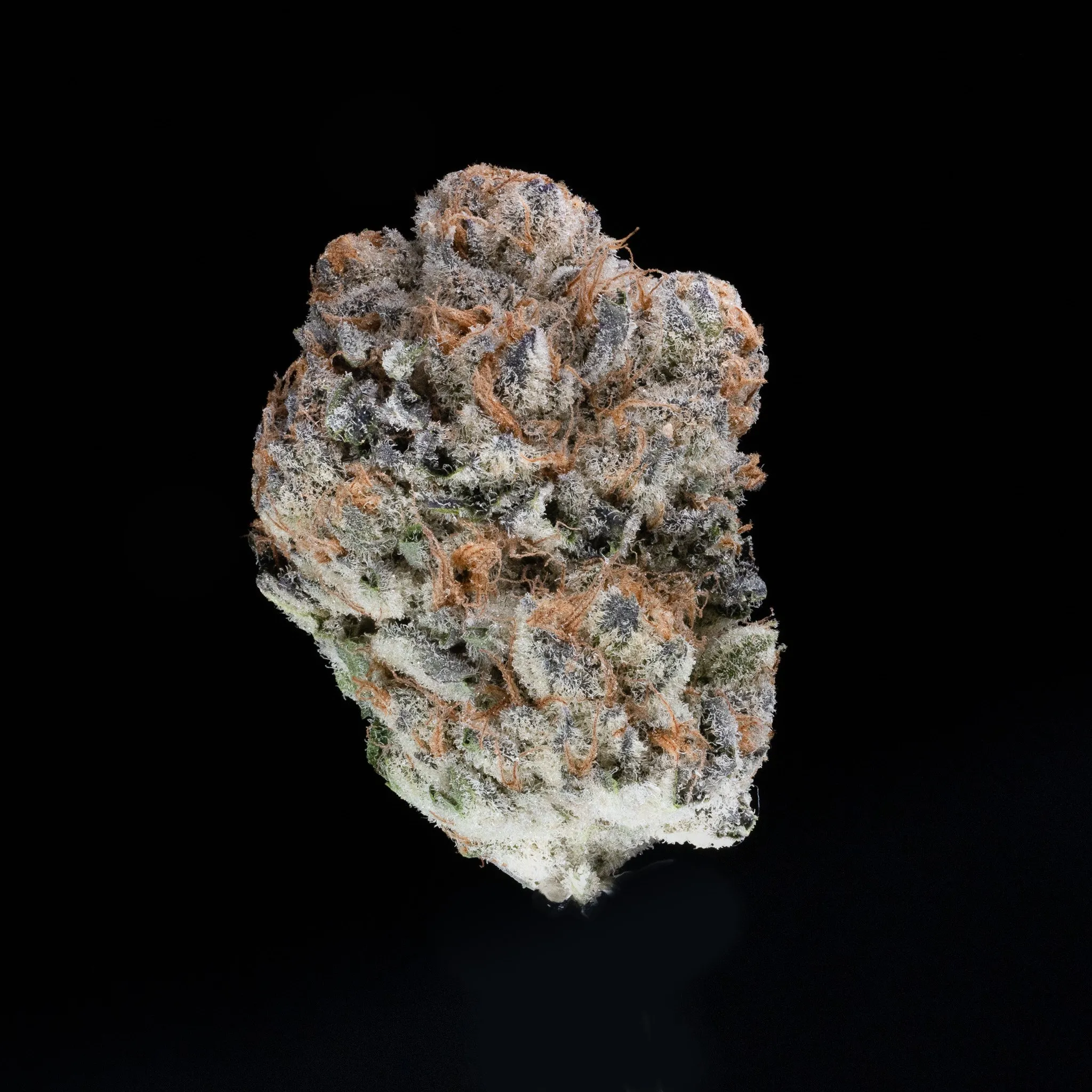
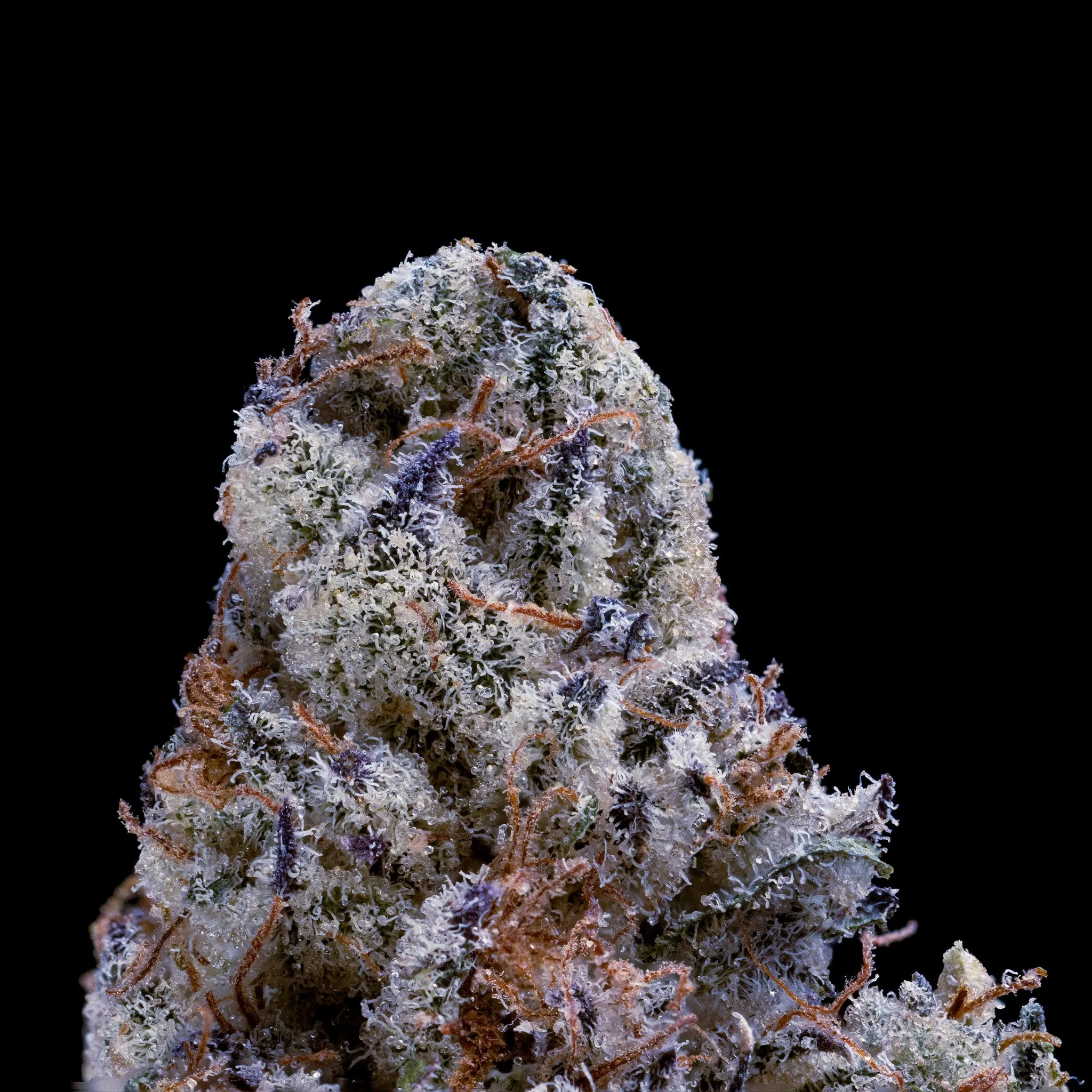
Releasable: dense, clean, well-dried flower
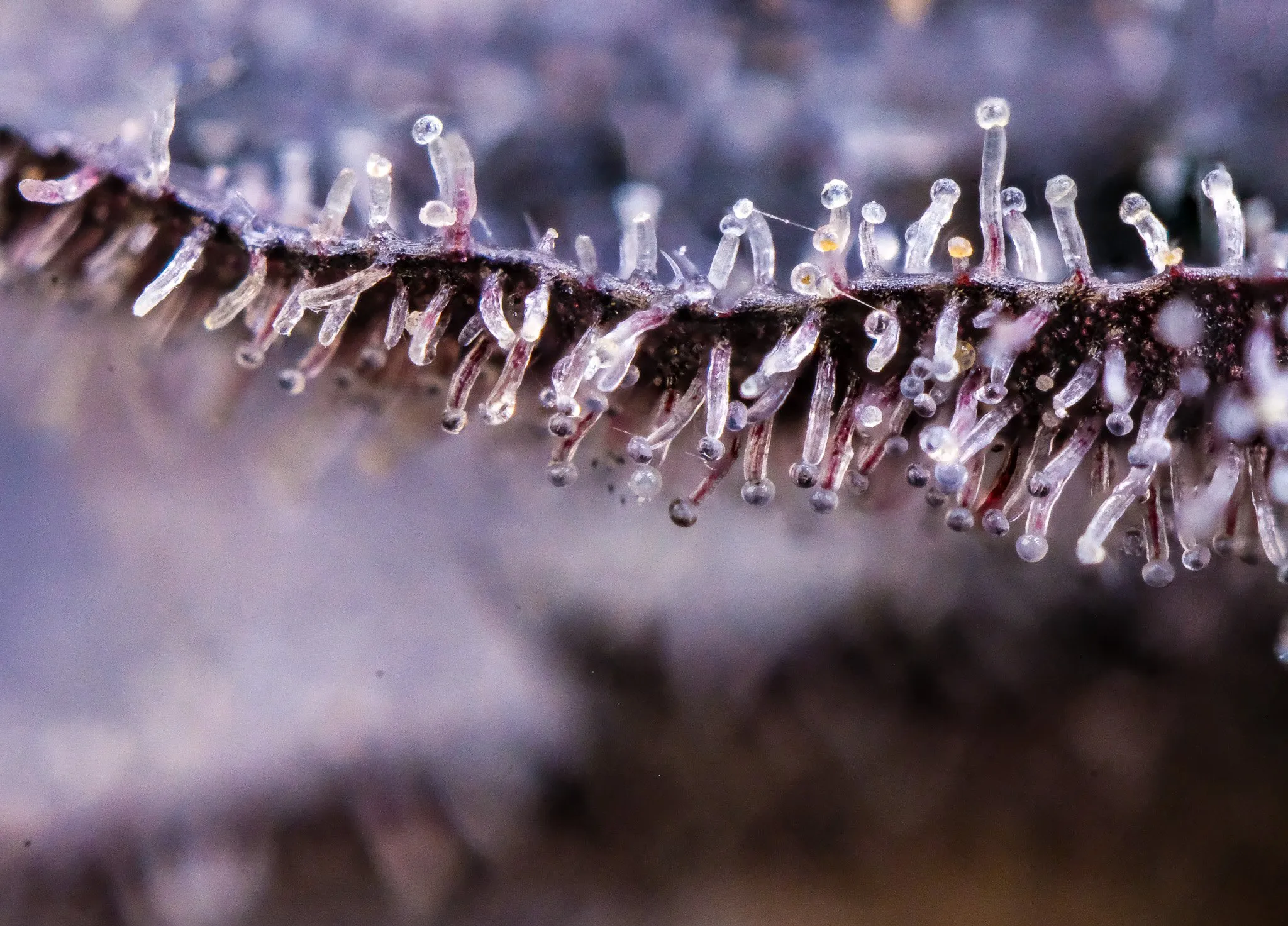
Close-up: intact trichomes
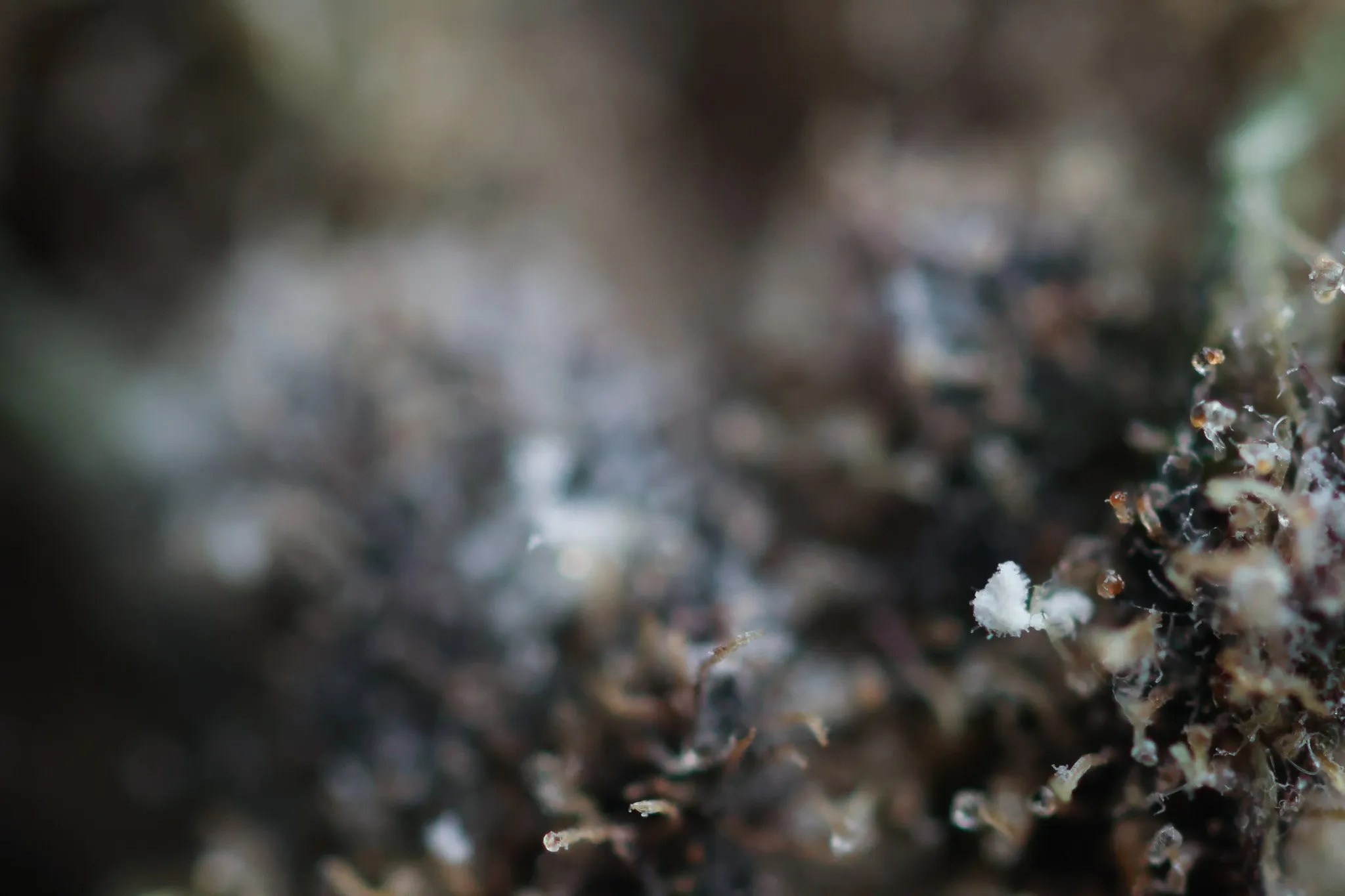
Blocked: powdery mildew on the flower
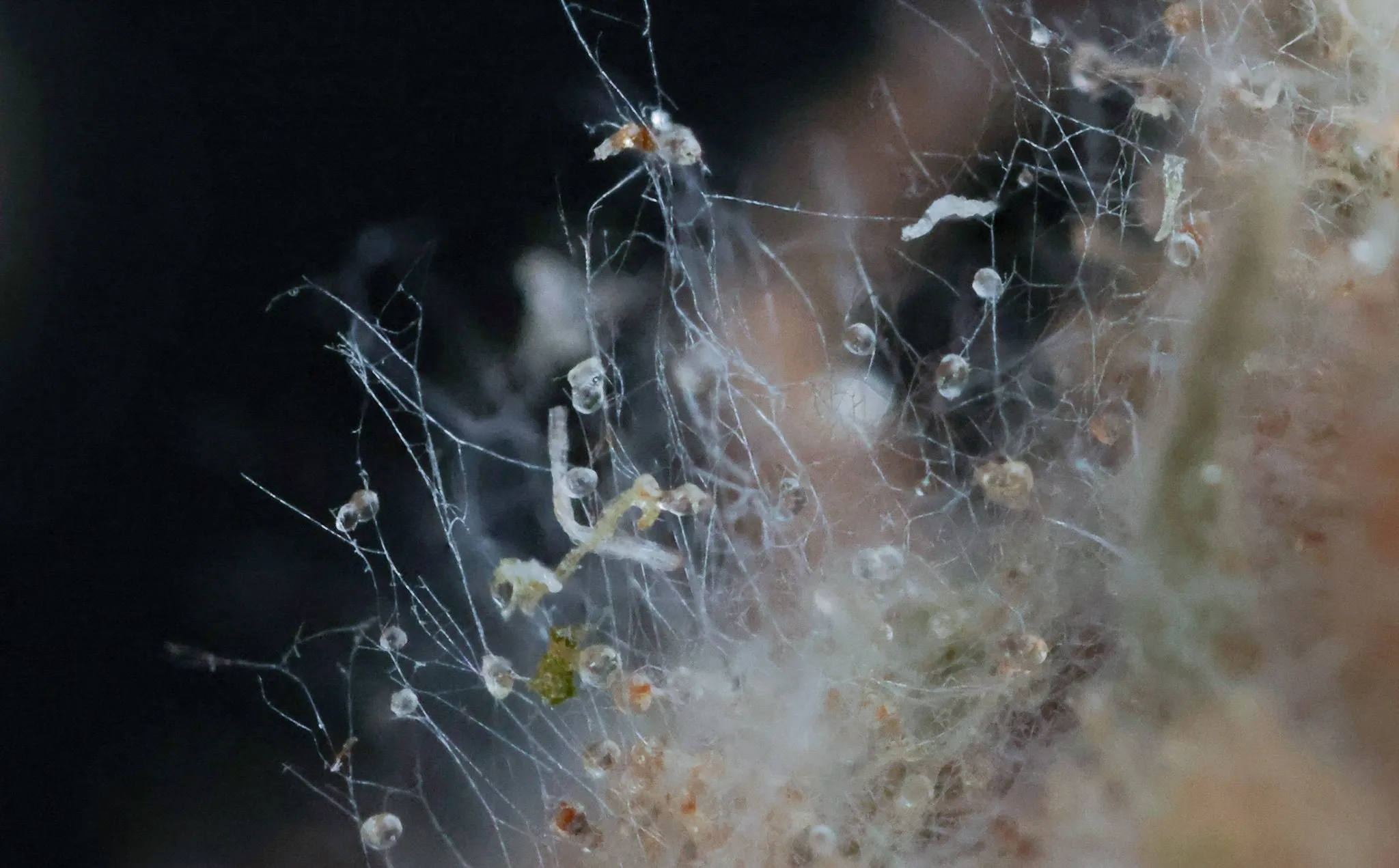
Blocked: mould mycelium
Real examples from practice · the blocked batches show powdery mildew and mould
02 Scope
What makes a batch releasable
GMP compliance only exists as a whole: a batch is releasable only when every link in the chain of evidence is in place. For each link we build the structures, documents and records you need — to the extent your product and your authority require. Equipment qualification (DQ to PQ) and computerised system validation (Annex 11) are carried out by Research Gardens together with partners.
The framework around it
Quality manual
Organisation & responsibilities
Risk management per ICH Q9
Self-inspections & internal audits
Complaints & recalls
Management review & product quality review
1
Starting materials
Identified, tested and released per batch.
What we build
Supplier and lab qualification
Specifications
Goods-in inspection
Lot tracking
2
Equipment & facilities
Qualified, maintained and cleaned at the time of processing.
What we build
Qualification (DQ/IQ/OQ/PQ)
Maintenance and calibration plans
Cleaning records
3
SOPs & people
Valid version, carried out by trained staff with the right permissions.
What we build
Document control
Training plan and records
Roles and permissions
4
Environmental & process data
Recorded and within validated specifications.
What we build
Environmental monitoring
Process parameters
Every reading linked to its batch
5
Deviations & changes
Investigated, assessed and closed in a traceable way.
What we build
Root-cause analysis
CAPA
Change control with impact assessment
6
Release
By the authorised role, four-eyes principle, electronically signed.
What we build
Batch records
Release workflow
Interface to the Qualified Person (QP)
7
The system itself
Validated, with a complete audit trail.
What we build
Computerised system validation (EU-GMP Annex 11)
Data integrity per ALCOA+
Batch releasable
Inspection readiness
Tested before the authority arrives
Before an authority or a customer audits you, we examine your system the way an auditor would — drawing on ten on-site GACP/GMP audits.
Gap analysis against GACP, EU-GMP or customer requirements
Mock inspection with walk-through, document requests and interviews
Sample traceability, certificate workflows and document control — and preparation for audits by your GMP customers. From hands-on experience as Head of IT & QMS at a plant lab.
Not included
Legal advice — we work with specialised law firms for that
Acting as Qualified Person (QP) or releasing batches
Laboratory analyses by external testing labs
Guaranteed permits, certificates or inspection outcomes
03 Digital QMS
One system instead of silos
The chain of evidence isn't assembled at the end in the QA office — it is created in every single work step. Spread across spreadsheets, paper and separate tools, it has to be pieced together by hand. In an integrated system, it is part of the work itself.
ExampleOne routine step, seven data sources
Weighing harvested flowers into a drying container
At that moment, this step needs data from seven areas.
01
Role & training
Is the person assigned, and is their SOP training current?
02
SOP task
Valid version, mandatory fields, four-eyes check.
03
Equipment
Scale qualified, last calibration, maintenance due?
04
Inventory & batch
Source batch, container lot number, cleaning-agent batch.
05
Room & environment
Temperature, humidity, CO₂ and pressure cascade within spec?
06
Facility control
Setpoints from the work instruction sent to the HVAC, actual values linked to the batch.
07
Deviation & CAPA
A deviation or OOS result linked directly to the batch and its CAPA.
Integrated, this context is available automatically and logged immutably.
With silos
Data from spreadsheets, paper logs and separate tools is merged by hand. Checks depend on individual memory, and ALCOA+ is hard to maintain across every manual hand-off.
With an integrated system
Role, SOP, equipment, batch, room and facility are linked. The step is released only when its preconditions are met, and everything ends up in the audit trail: operational safety in every step, not “QMS” as a label.
Target architecture · rolled out module by module
Six modules, one data model
These building blocks can't be separated sensibly. Run apart, they create double bookkeeping, fragile interfaces and gaps in the chain of evidence. In FlowerSynk they are being built on one data model and rolled out module by module.
SOP tasks
SOPs become executable work steps instead of static documents — with mandatory fields and four-eyes checks. Paper records are error-prone, hard to defend in inspections and create review work for QA.
CAPA & change control
Deviations with root-cause analysis; CAPA corrective first and, for repeated or systemic causes, with an updated risk assessment and a preventive action; change control with impact assessment whenever the validated state is affected.
Validation & qualification
Qualification along the V-model (DQ → IQ → OQ → PQ). The system that holds the evidence is validated itself (EU-GMP Annex 11) — built up in parallel with the implementation and completed before go-live.
Equipment integration & maintenance
Facility control, maintenance plan, cleaning log and batch are linked: whether machine X was qualified when batch Y ran is answered in one click. Setpoints from the work instruction go straight to the facility, and the task is released only once the validated state is reached.
The work instruction is no longer a document next to the facility — it controls it.
Inventory & ERP
QMS and ERP master data overlap to a large extent: approved suppliers, materials with specifications and lot tracking, goods-in inspection, batch release status. Kept in one place, there is no double bookkeeping.
Shared foundation
Audit trail & ALCOA+
Underneath every module: each entry attributable, legible, contemporaneous, original and accurate — and complete, consistent, enduring and available. Every change stays traceable.
FlowerSynk – our own platform, developed together with CarbonActive
FlowerSynk serves as the software basis for the digital QMS. The thinking behind its architecture comes from developing a compliance and track-and-trace platform and from building complete quality systems.
Live today
Marketplace connecting GACP producers and GMP buyers
Quality matching against buyer specifications and country-specific limits
FlowerSynk also supports shared supplier audits: one documented GACP/GMP supplier qualification that several buyers can use. Supplier audits
What software doesn't replace
A digital system replaces neither the Qualified Person nor inspections nor the operator's responsibility — and it doesn't guarantee regulatory approval.
For cultivation associations, a system like this is usually oversized. The right-sized entry point is our hygiene QMS. Hygiene QMS
04 Timing & liquidity
The QMS belongs in the construction phase.
You can produce without a finished QMS — but only a released batch can be placed on the market.
01
Filled and validated, not just introduced
Before the first commercial batch you need valid SOPs, trained staff, qualified equipment, closed CAPAs from the test phase and a documented validation status.
02
The most capital-intensive phase
Between the end of construction and the first releasable batch, costs run in full while revenue is still missing. This is usually the most capital-intensive phase of the entire project.
03
Every month counts
Every month spent catching up on the QMS pushes back first revenue, break-even and the ROI horizon — and adds to the runway that has to be financed.
GACP (Good Agricultural and Collection Practice) covers cultivation, harvest and the first processing steps of the plant as a herbal starting material. EU-GMP covers manufacturing, packaging, testing and release of the medicinal product. In between lies a transition whose exact position is not fixed across the board.
01
Genetics & propagation
02
Cultivation
03
Harvest
04
Drying
05
Trimming & sorting
06
Packaging & labelling
07
Testing & release
GACP
EU-GMP
Transition — depends above all on the end product: flower or extract
01Genetics & propagation GACP
02Cultivation GACP
03Harvest GACP
04Drying GACP or GMP*
05Trimming & sorting GACP or GMP*
06Packaging & labelling EU-GMP
07Testing & release EU-GMP
* depending on the end product: flower → GMP, extract → GACP possible
01
Flower or extract decides
What matters most is whether the end product is flower or extract. If flowers are the end product, drying and trimming already have to run under GMP; if an extract is the end product, these steps may still be carried out under GACP.
02
The authority has a say
Competent authorities and target markets interpret the requirements differently. What is accepted in the producing country does not automatically hold in the target market.
03
The boundary belongs in your QMS
We clarify the boundary for your product early and document it in a traceable way — as the basis for agreeing it with your Qualified Person and the authority.
Common misconception
GMP doesn't mean cleanroom
GMP calls for risk-based facility design and well-thought-out processes — not automatically classified cleanrooms. Cannabis is a non-sterile product: in most process rooms, controlled not classified areas (CNC) are usually sufficient. Which room needs what follows from the risk assessment.
Simplified for orientation, not legal advice. What counts are the requirements of your competent authority and your licences. For legal questions we work with specialised law firms from our partner network.
06 Cultivation associations
No pharma QMS, but a system that protects your members.
Cultivation associations pass cannabis on to their members and are responsible for its quality. Germany's Consumer Cannabis Act (KCanG) requires, among other things, careful documentation of cultivation and of what is passed on — but leaves largely open what a quality system for this should look like.
A GMP system would be disproportionate for an association. What it takes are the elements that actually carry product safety: lean enough for everyday club life, robust enough when a lab result raises questions.
From the association work
Lorenz Minks leads the BCAv working group on risk minimisation and product safety. Its central question is exactly this one: how can risks for members be minimised with reasonable effort?
24 cultivation associations and cannabis social clubs are among the references of Research Gardens.
01
Responsibility & structure
Who decides what? A few clear SOPs and forms instead of thick binders.
02
Starting material & inputs
Seeds and cuttings, substrates, fertilisers and plant protection: selected, checked, documented.
03
Batches & traceability
A clear batch definition — from mother plant to the member.
04
Sampling, lab & release
Representative samples, a qualified lab, retention samples and a clear rule for who releases or blocks a batch.
05
Equipment & maintenance
Calibrated scales, pH and EC meters and maintained climate equipment — so that weights and readings are right.
06
Deviations & communication
What happens in case of mould, pests or an unexpected lab result — and how do affected members find out?
07
Training
Short, practical briefings with records — even when the team changes.
08
Hygiene
Cleaning, disinfection and hygiene zones from cultivation to dispensing — as a module of its own in the hygiene QMS.
Digital club QMS
FlowerSynk Club
The club version of FlowerSynk — our own platform, developed together with CarbonActive — for cultivation associations. See more in a demo.
For most associations, the right-sized entry point is the hygiene QMS: gap audit with surface swabs, SOPs, cleaning plan and training. Batch, lab and release rules can be added as needed.
Product, target market, authority, timeline and existing documents: we assess where you stand and what makes sense next.
Free · 30 minutes
2
Strategy & QMS architecture
Phase 1: gap analysis, GACP/GMP boundary, digital target state, module and role landscape, implementation roadmap.
Target state & roadmap
3
Modular implementation
Master data, SOP tasks, documents and workflows are built in iterations with demos — together with your team. After each module block you decide: continue or stop.
Demo & decision gate
4
Validation & training
System validation in parallel with the implementation, training of all roles with records — completed before go-live.
Validation records
5
Go-live & mock inspection
Support in the first weeks, so that no workarounds or shadow spreadsheets creep in; then an internal audit or mock inspection, CAPA plan and handover to your QA.
Audit report & CAPA
For cultivation associations
Much leaner: gap analysis, a few SOPs and forms, batch and release rules, training — often with the hygiene QMS as the entry point.
09 Experience
Quality systems from both sides of the audit
Research Gardens combines building quality systems with the auditor's perspective: having pre-qualified around 40 producers and audited ten facilities on site, we know where quality systems tend to have gaps in practice.
2021 – 2023 · Cannavigia
Complete quality systems
As first employee and product owner of a compliance and track-and-trace platform for medical-cannabis operators: led the creation of a reusable QMS template framework and built complete quality systems — plus a transaction-monitoring solution for the Swiss cannabis pilot projects.
The quality-system work was reviewed with Luis Meirinhos-Soares, former Head Inspector GACP at Infarmed (Portugal).
Switzerland
Speropharm
Complete GACP QMS
Zimbabwe
Luxacan
Complete GACP QMS
Switzerland
PhytoVitality
QMS advisory
since 2023
380 nanometer
Quality-system development, facility design and investor relations for a planned medical-cannabis facility in Germany.
2023
GACP/GMP audits for STADA (via Corellia)
Pre-qualification of around 40 producers worldwide and ten audits of cultivation and processing facilities in Portugal, Germany and Canada.
2022 – 2024
Alpine Biolabs
Head of IT & QMS at a plant lab for pathogen testing, tissue culture and clones: sample traceability and certificate workflows.
2021 – 2024
AvaGro / Avacare, Namibia and Zimbabwe
Planning of a GMP-compatible production facility and a plant-tissue-culture lab including the quality-system requirements; advisor to the first GMP cannabis project in Zimbabwe.
current
BCAv & BVCW
Coordinator of the BCAv and lead of its working group on risk minimisation & product safety; board member of the BVCW.
2016 – 2018
IT internal audit, Schwarz Dienstleistungen (Lidl/Kaufland)
The foundation: controls, structured assessment and audit-proof documentation.
Quality assurance comes up regularly in the journal and on YouTube — from whether recreational cannabis needs GMP to missing lab standards for cultivation associations.
Research Gardens is a consultancy based in Küsnacht (Zurich), backed by a network of specialised partners — including law firms for legal questions. You have one fixed contact from the first call to the mock inspection.
My path into quality assurance ran through IT internal audit, horticultural studies and a hectare of outdoor cultivation. Most of it I learned in teams: building quality systems at Cannavigia, auditing producers in Portugal, Germany and Canada, and working with cultivation associations.
At the BCAv I lead the working group on risk minimisation and product safety; I also serve on the board of the BVCW.
That depends on your product, your target market and the competent authority. As a rule, GACP covers cultivation, harvest and first processing steps; EU-GMP covers manufacturing, packaging, testing and release. Where the line runs depends above all on the end product: for flowers, drying and trimming already fall under GMP; for extracts, they may remain GACP. Many medical-cannabis operators need both — with a clearly documented boundary between them. We clarify it at the start; your authority's interpretation is what counts.
Does a cultivation association need a GMP QMS?
No. The KCanG does not require cultivation associations to run a GMP system, and it would be disproportionate. What makes sense are the elements that carry product safety: batch records, lab and release rules, calibrated equipment, hygiene and training. The hygiene QMS is a good place to start.
How long does the set-up take?
That depends on your starting point, the scope and how much time your team has. After phase 1 — strategy and QMS architecture — you receive a roadmap with modules and decision gates. What matters most is when you start: alongside construction, not afterwards.
Can we keep using our existing software?
We clarify that in phase 1: which systems are in use, where data is transferred by hand, and what has to come together. Our own platform FlowerSynk serves as the software basis; its QMS modules are being rolled out module by module. Where an existing system still makes sense, we plan the interface instead of maintaining data twice.
Do you act as QP or head of QA?
No. Batch release and responsibility for the quality system stay with your Qualified Person and your organisation. We build the system with you, train your team and test it beforehand — but we replace neither the QP nor the authority's inspection.
Who answers legal questions?
Research Gardens advises on quality systems, not on legal matters. For legal questions — on licences, contracts or liability, for example — we work with law firms from our partner network: Kanzlei Nelkenstock, Olivia Ewenike and Dr. Fandrich Rechtsanwälte.
Next step
Where does your quality system stand today?
Whether it's the first SOP, GMP preparation under way or a cultivation association about to start: in a free 30-minute call we assess your situation and discuss sensible next steps.