Hygiene from cultivation to dispensing — measured, not assumed.
A lean hygiene QMS for cultivation associations and cannabis facilities: clear SOPs, work instructions at the workplace, verifiable records — and surface swabs before and after implementation that show what has changed.
For cultivation associations, CSCs, cannabis facilities and dispensing points
Your hygiene QMSschematic
Hygiene conceptincl. risk analysis1
SOPswhole process chain10
Work instructionsat the workplace~15
Checklists & formsrecords~15
Master cleaning & disinfection plan
Monitoring plan with warning & action limits
On-site visit 1
Gap audit · initial swabs
On-site visit 2
Training · final check · repeat swabs
45+
companies advised
from CSC to pharma
24
cultivation associations & CSCs
among the clients
10
on-site GACP/GMP audits
PT · DE · CA
BCAv
working group lead
product safety
Why it matters
Hygiene problems rarely show where they start.
Mould on a batch, a finding during an inspection, a complaint from a member — that is the visible end. The causes usually sit where nobody looks every day: in a condensate tray, on a trimming tool, on the scale or at the dispensing counter.
01
Mould and botrytis
Humidity, air flow, condensate and plant checks influence whether botrytis or mildew can take hold — in the grow room and in drying. An infestation caught late can cost plants and whole batches.
02
Contamination at product-contact surfaces
Scissors, trays, scales and packaging tables touch the flower directly. Resin residues and incomplete cleaning can carry contamination from one batch to the next.
03
Findings during inspections
An inspection looks beyond clean floors: who is responsible, which procedure applies, where it is recorded. Gaps in the documentation can lead to findings — even where the team works carefully.
04
Product safety and members' trust
Members expect a clean product and notice when routines slip. Consistent, documented hygiene is part of product safety — and of the trust a club is built on.
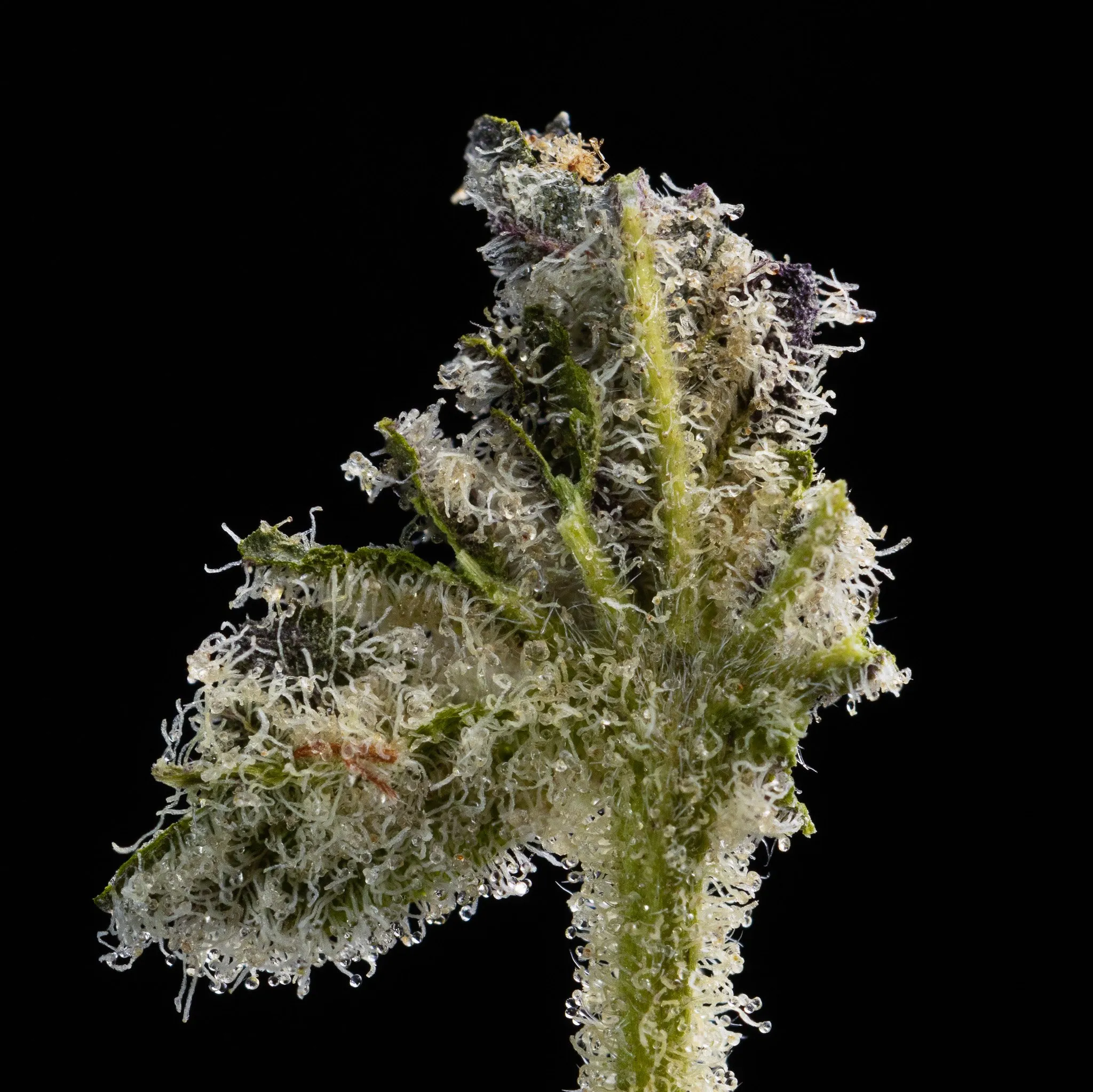
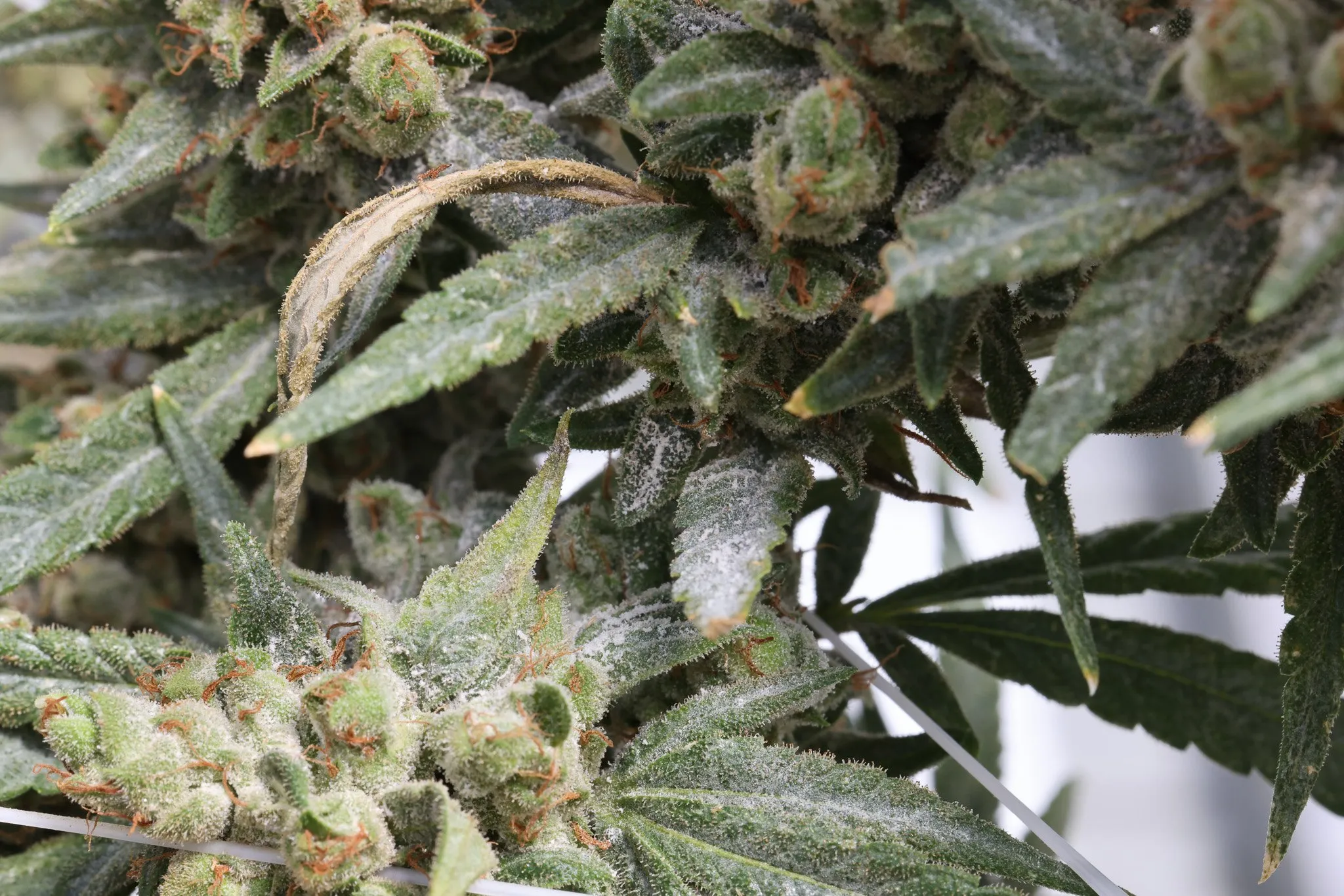
Powdery mildew on the plant
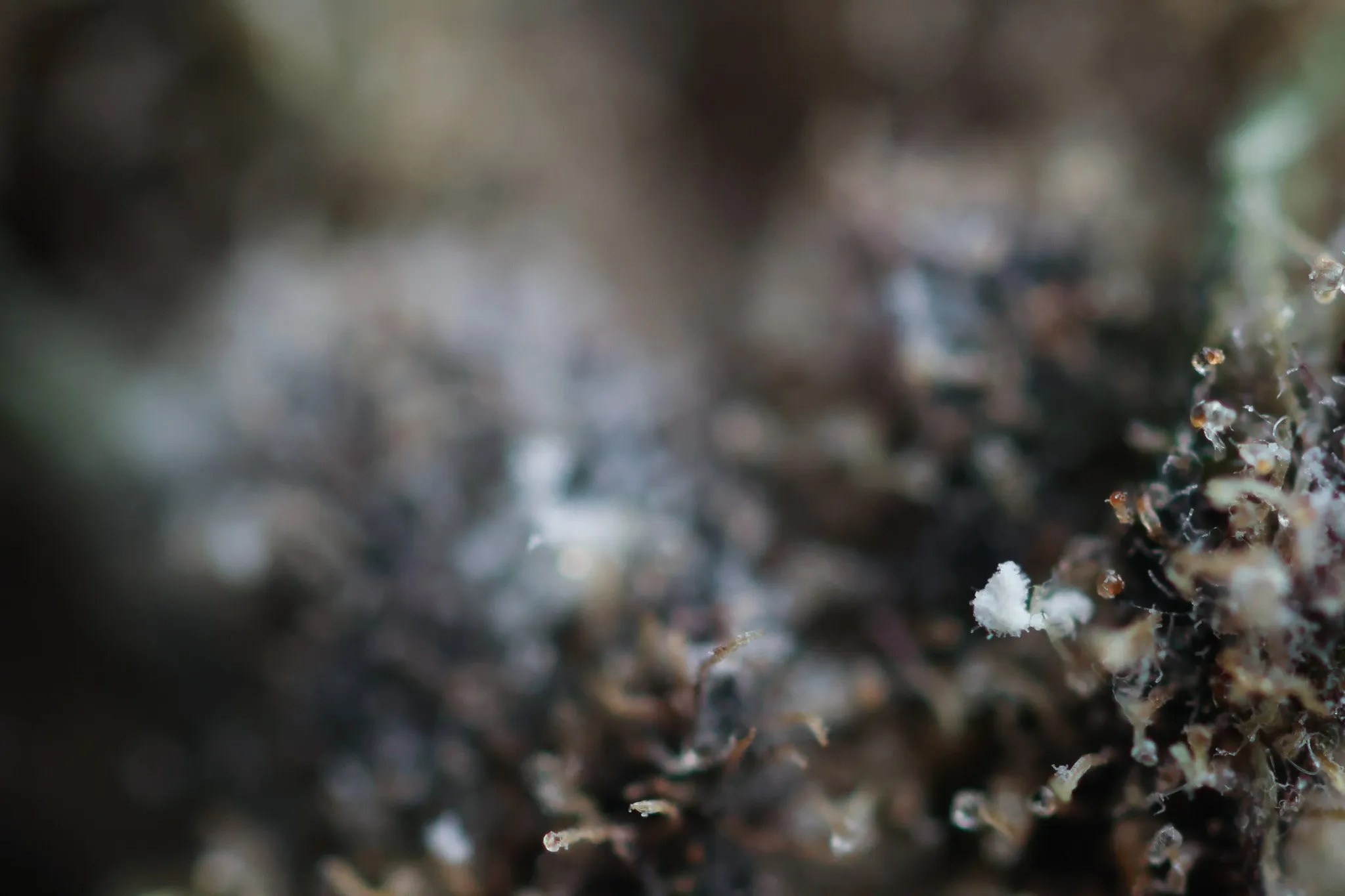
Powdery mildew on the dried flower
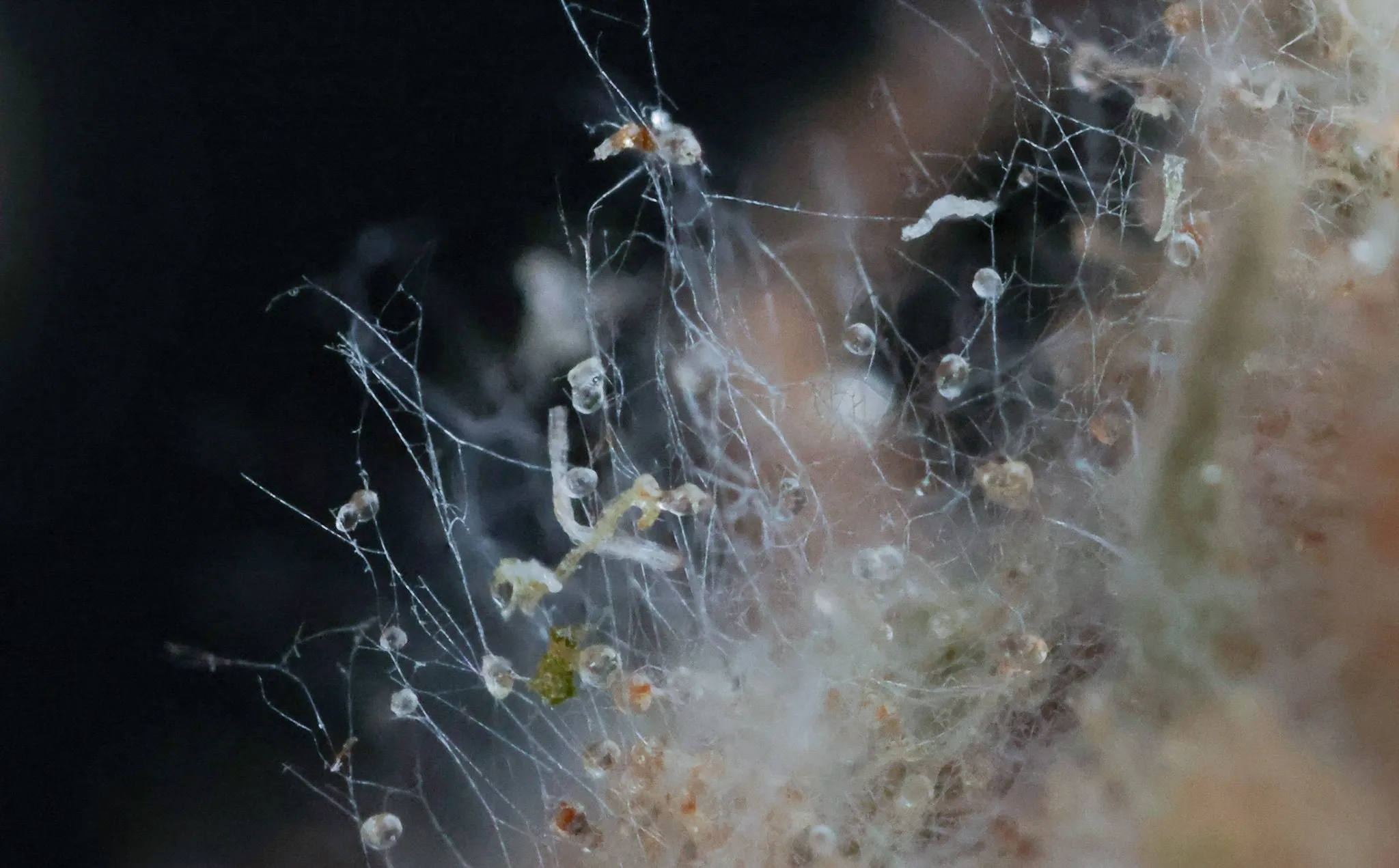
Mould mycelium on the flower
Negative examples from practice — what a hygiene QMS is meant to prevent
Project goals
Lean, close to the workplace, verifiable.
Not a binder for the shelf, but a system for daily work: a lean, clearly bundled document structure, instructions where the work happens — and a measurable check of whether it works.
Lean document structure with clearly bundled SOPs
Work instructions close to the workplace for critical tasks
Records through checklists and forms
Special focus on product-contact surfaces, packaging and dispensing
Effectiveness check with surface swabs before and after implementation
Who it's for
For clubs and facilities that grow, process and dispense cannabis.
Cultivation associations & CSCs
Where members and staff share the work, hygiene routines have to be simple, unambiguous and easy to teach — set up before the first harvest or introduced in running operation.
Cannabis facilities
Cultivation and processing operations that need structured hygiene from the grow room through drying and trimming to packaging — without the effort of a pharmaceutical QMS.
Dispensing points & storage
Wherever product is stored, weighed and handed over: containers, storage climate, dispensing surfaces, clean and unclean zones and the daily final cleaning.
Structured assessment of all hygiene-relevant areas — from buildings, rooms and HVAC to the dispensing point — including risk-based surface swabs. Result: a documented gap analysis with prioritised measures.
2Concept
Hygiene concept & risk analysis
Site-specific hygiene concept covering contamination paths via people, tools, plant material, water, air/HVAC, condensate, pests, packaging material and handling at the dispensary: hygiene zones and people/material flow, responsibilities, cleaning frequencies, technical hygiene risks, deviations and blocking, monitoring.
3Documents
SOP system, work instructions & records
10 SOPs, around 15 work instructions and 15 checklists and forms, a master cleaning and disinfection plan with an agent matrix (resin remover vs. cleaning vs. disinfection, incl. rinsing) and a risk-based hygiene monitoring plan with warning and action limits.
4On site · visit 2
Training, final audit & verification
Hands-on training for staff and members on site, followed by a final check of the implementation, repeat swabs at selected points and a comparison with the initial gap audit — plus a list of remaining measures.
Between the visits
Concept and documents are developed in coordination with you, so your team can start implementing them before the final check.
On-site gap audit
What we look at on site
The first on-site visit is a structured walk through the entire operation — from the building to the dispensing counter. What we find goes into the gap analysis with prioritised measures.
01 Building & technology
Buildings, rooms and surfaces
HVAC and dehumidification: filters, condensate, air flow
Irrigation
02 People & cleaning
Staff and access hygiene
Cleaning and disinfection
Tools and cannabis-contact surfaces
03 Process chain
Cultivation and production areas
Harvest, drying and trimming
Packaging
Storage and dispensing point
04 Risks & records
Waste
Pest and mould management
Existing documentation
Risk-based surface swabs
Measured at selected points during the gap audit — with a focus on product-contact surfaces, packaging and dispensing — and repeated at the final check. The comparison shows what the implementation has changed.
SOP system
Ten SOPs covering the whole chain
Each SOP bundles one topic. Work instructions bring it to the workplace, checklists and forms record that it was done — one clear line from rule to record.
Cultivation
Harvest
Drying
Processing
Packaging
Storage
Dispensing
Hygienically controlled process chain
SOP 01
Hygiene organisation & responsibilities
Organisation, documentation and document control, training requirements, internal hygiene checks.
SOP 02
Staff, access & area hygiene
Access, work clothing, hand and shoe hygiene, visitors, contractors, illness and injuries.
SOP 03
Cleaning & disinfection
Rules for rooms, floors, equipment and all process areas incl. agents, concentrations, contact times and release.
Surface swabs, evaluation, re-measurement, re-cleaning, blocking, corrective actions and re-release.
Cleaning & monitoring
Clean first, then disinfect — and check the result.
Master cleaning & disinfection plan
The right agent for every surface
One plan for all areas: what is cleaned, how often and by whom, with which agent, concentration and contact time — and who releases it. The agent matrix separates resin remover, cleaning agent and disinfectant and specifies where rinsing is needed.
Mandatory sequence for cannabis-contact tools and surfaces
01 Resin removal
02 Cleaning
03 Disinfection if required
04 Drying
05 Release
Disinfection only works reliably on a clean surface — which is why resin and dirt come off first.
Hygiene monitoring
Warning and action limits
Swab points, frequencies and limits are set by risk. Every result leads to a defined next step:
Below the warning limit
Documented — the routine continues.
Between warning and action limit
Re-clean, re-measure, watch the trend.
Above the action limit
Block, re-clean, corrective action — re-release only after a new measurement.
Schematic — the concrete limits are set per site in the monitoring plan.
Deliverables
What you receive
Concept, documents, training and verification — built so that your team can keep the system running after the project.
0410 SOPs, ~15 work instructions, ~15 checklists & forms
05Master cleaning & disinfection plan with agent matrix
06Hygiene monitoring concept
07Hygiene and maintenance system for HVAC/dehumidification
08Packaging and dispensary concept
09On-site staff training incl. practical exercises
10Final gap check with verifying surface swabs
Not included
Laboratory or microbiological analyses by external labs
Swab/ATP measuring device and consumables (provided by the client)
Construction, refurbishment or installation work
Actual cleaning of the facility, technical maintenance or repairs
External pest control, legal advice or guaranteed regulatory approval
Please note
The hygiene QMS is a practical system for cultivation associations and cannabis facilities. It is not a GMP quality management system for pharmaceutical manufacturing.
Research Gardens is a consultancy based in Küsnacht (Zurich). Your hygiene project is handled by Lorenz Minks personally — from the gap audit to the final check, drawing on experience from cultivation, quality systems and audits.
Relevant experience
2021 – 2023
Quality systems at Cannavigia
Reusable QMS template framework; complete GACP quality systems for Speropharm (Switzerland) and Luxacan (Zimbabwe). The quality-system work was reviewed with Luis Meirinhos-Soares, former Head Inspector GACP at Infarmed (Portugal).
2023
GACP/GMP audits for STADA (via Corellia)
10 on-site audits of cultivation and processing facilities in Portugal, Germany and Canada.
That depends on the size of the operation, the number of areas and how quickly drafts can be reviewed and put into practice on your side. The fixed points are the two on-site visits: the gap audit at the start, training and final check at the end. After the first meeting you receive a schedule that fits your operation.
Who provides the swab or ATP measuring device?
You do. The measuring device and consumables are provided by the client and are not part of the offer — that way the device stays in your operation and remains available for routine monitoring after the project. If you don't have one yet, simply mention it in the first meeting.
What does our team need to prepare?
Not much. For the gap audit: access to all areas, the documents you already have (cleaning plans, checklists, SOPs), a contact person who knows the daily routines — and the measuring device with consumables for the swabs. For the training, plan time for the staff and members who work in the critical areas.
Does the hygiene QMS replace a GMP quality management system?
No. The hygiene QMS is a practical system for cultivation associations and cannabis facilities, not a GMP quality management system for pharmaceutical manufacturing. If you produce medical cannabis under EU-GMP or GACP, our quality-system consulting is the right starting point.
Yes. The ten SOPs cover areas every club has, from cultivation to dispensing. Work instructions, checklists and the monitoring plan are scaled to your rooms, your team and your routines. Scope and effort are agreed after the first meeting.
Next step
Where does your operation stand on hygiene?
Tell us about your facility, your team and your timeline. In a free 30-minute call we clarify scope, procedure and next steps — you then receive a concrete offer.
Areas of your operation — grow rooms, drying, processing, packaging, dispensing
Existing cleaning plans, checklists or SOPs
Your timeline, e.g. first harvest or an upcoming inspection
Whether a swab/ATP measuring device is available
Cookie settings
We would like to use Google Analytics to understand how our website is used. This only happens with your consent, which you can withdraw at any time. Privacy policy