
Due diligence & company valuation
Does the operation deliver what the plan promises?
Independent technical and operational due diligence of cannabis facilities and operators. We check plan assumptions, production KPIs, capacity and market against documents, a site visit and an independent model — and add a valuation view from an operator's perspective.
For investors, acquirers, funds, family offices and banks — and for companies preparing a sale or a financing round
- companies advised along the cannabis value chain
- 45+
- on-site GACP/GMP audits of cultivation and processing facilities in PT, DE and CA
- 10
- plus capital requirement and scenarios — in our own planning model
- DCF · IRR
- signed before any document is exchanged
- NDA
Occasions
Four occasions, one question: does the plan hold?
Whether you buy, invest, lend or sell — the decision rests on assumptions about yields, costs, capacity and market. An independent review shows how robust they are before money moves.
-
Acquirers
Acquisition
Is the operation worth the price — and what still needs to be invested after closing?
Typical focus: Facility condition, capex backlog, realistic size, key people
-
Investors · funds · family offices
Investment
Can this team deliver the plan — with this facility, in this market?
Typical focus: Plan assumptions, production KPIs, sales market, IRR of your position
-
Banks · lenders
Financing
Is the capital requirement covered — even if the ramp-up takes longer than planned?
Typical focus: Liquidity, capital requirement, downside scenario, capex and timeline
-
Founders · companies
Sale or financing round
Which questions will investors ask — and are the answers ready before the data room opens?
Typical focus: Pre-check of plan and documents, red flags addressed early
Scope
What we look at
Each review is scoped to the occasion. At its core are five questions that decide whether a plan holds — complemented by the areas an operator would check before taking over a facility.
01 Plan assumptions
Do the assumptions hold?
Plausibility check of the assumptions behind a business plan or valuation.
- Yields and prices
- Ramp-up to stable production
- Cost base: staff, energy, consumables, maintenance
- Capex and timeline to operation
02 Production KPIs
How does production actually perform?
Where production is already running: plan figures compared with production records and with what we see on site.
- Yield per m² and per cycle
- Cost per gram
- Cycle and turnaround times
- Labour input and energy use
- Batch failure and rejection rates
03 Realistic size
How large can the company realistically become?
The capacity that site, facility, permits and market actually support — compared with the size the plan assumes.
- Site and buildings
- Facility: rooms, climate, drying, processing
- Scope of permits and licences
- Volumes the market can absorb
04 Economies of scale
Where does scale help — and where does it stop?
Which costs fall with volume and which don't — and where growth runs into limits.
- Costs that fall with volume
- Fixed and step-fixed costs
- Limits: rooms, climate, staff
- Growing QMS and documentation effort
05 Sales market
Who buys — and at what price?
Sales assumptions in the light of the market — an operational view, not a legal assessment.
- Demand and price development
- Offtake and sales channels
- Competition
- Market access
Checked in an independent model
Assumptions and KPIs are rebuilt in our own planning model — so that size, economies of scale and financing needs follow from one consistent calculation.
Also in view — what an operator would check
06 Facility & technology
- Condition and maintenance of buildings and equipment
- Climate/HVAC, lighting and irrigation
- People and material flows, hygiene zones
- Capex backlog and realistic operating costs
07 Quality system & licensing readiness
- QMS maturity: documents, deviations, CAPA
- Batch records and traceability
- Hygiene and product quality
- Operational readiness for licence requirements and inspections — no legal assessment
08 Supply chain & suppliers
- Critical suppliers: genetics, inputs, packaging
- Single-source dependencies and alternatives
- Qualification status of key suppliers
- Service providers: laboratories, logistics, maintenance
09 Team & organisation
- Key people and responsibilities
- Key-person dependencies
- Staffing compared with the plan
- Reporting and decision-making
Model & valuation view
The plan, rebuilt in an independent model
Rather than only commenting on the target's spreadsheet, we rebuild its key assumptions in our own planning model. Size, economies of scale and financing needs then follow from one transparent calculation — and every adjusted assumption stays visible.
- DCF valuation
- Free cash flows before financing plus terminal value give the enterprise value; less net debt, the equity value.
- IRR
- The return of your investor position — per scenario.
- Capital requirement
- When and how much money has to be available, read from the monthly cash curve.
- Scenario comparison
- The target's plan and adjusted cases, with the key figures side by side.
- Technical & capex model
- Capacity and investment derived from the layout, with built-in plausibility checks.
Monthly cash curve · cumulative
schematic
Target's plan Adjusted assumptions Capital requirement
Enterprise value via DCF: free cash flows before financing + terminal value
An operator's perspective
The valuation view answers an operator's question: what is this business worth to someone who has to run it — with realistic yields, actual costs and the investments still ahead? It is a working tool from SME practice, not a certified valuation method, and it complements the work of auditors, tax advisers and lawyers rather than replacing it.
How the planning model worksIndependence
An independent review — and what it is not
Independence shows in the method: no finding rests solely on the company's own account. Each area is checked against several sources — documents, the site, conversations with management and our own model.
- We work for you as the client and report to you — not to the other side of the transaction.
- Potential conflicts of interest — for example if a party to the transaction is or was a client or partner of Research Gardens — are disclosed before the mandate starts.
- The fee does not depend on whether the transaction goes ahead.
- Every finding can be traced to a document, an observation or a conversation.
Evidence matrix
schematic
primary source supporting
Typical emphasis — the actual scope is agreed per mandate.
What the review does not replace
- Legal due diligence — permits, contracts, corporate law
- Tax due diligence and tax structuring
- Audit of financial statements and financial due diligence of historical figures
- Formal valuation reports (e.g. IDW S 1) and fairness opinions
The review provides an operator's technical, operational and economic view — in a form your lawyers, tax advisers and auditors can build on.
Legal & tax — with partners where needed
We work alongside your lawyers and tax advisers. Where needed, we involve law firms from our partner network; legal advice is provided by the firms themselves.
- Kanzlei Nelkenstock
Cultivation associations & narcotics law · Frankfurt
- Olivia Ewenike
Criminal & cannabis law · Munich
- Dr. Fandrich Rechtsanwälte
Business, corporate & medical law · Stuttgart & Bonn
Procedure
Typical sequence — adapted to each occasion
There is no one-size-fits-all procedure. Most reviews run through these five steps; depth and timing follow the occasion and the data available.
- 1
NDA & data request
Confidentiality agreement first. Then a request list tailored to the occasion: plans, permit documents, production and quality records, financial model.
Request list
- 2
Document review & model
We review the documents and rebuild the key assumptions in our own model. Gaps and contradictions become questions for management.
Question list
- 3
Site visit & management Q&A
Walk-through of the facility, spot checks of records and conversations with management and key people — ideally on a normal production day.
Notes & evidence
- 4
Findings & valuation view
Findings are rated by their impact on value, timeline and risk. Adjusted assumptions flow into scenarios, capital requirement and the valuation view.
Findings & scenarios
- 5
Report & discussion
Red-flag report and prioritised findings, discussed with you — and, if you wish, with your investment committee, bank or advisers.
Report & debrief
If you wish, Research Gardens can support selected measures from the findings after closing — for example liquidity planning, quality system or facility topics. This is agreed separately, after the report has been delivered, so that the review itself stays independent.
Deliverables
What you receive
Typical deliverables — format and depth are agreed per mandate. Every finding is documented so that your investment committee, bank or advisers can follow it without having been on site.
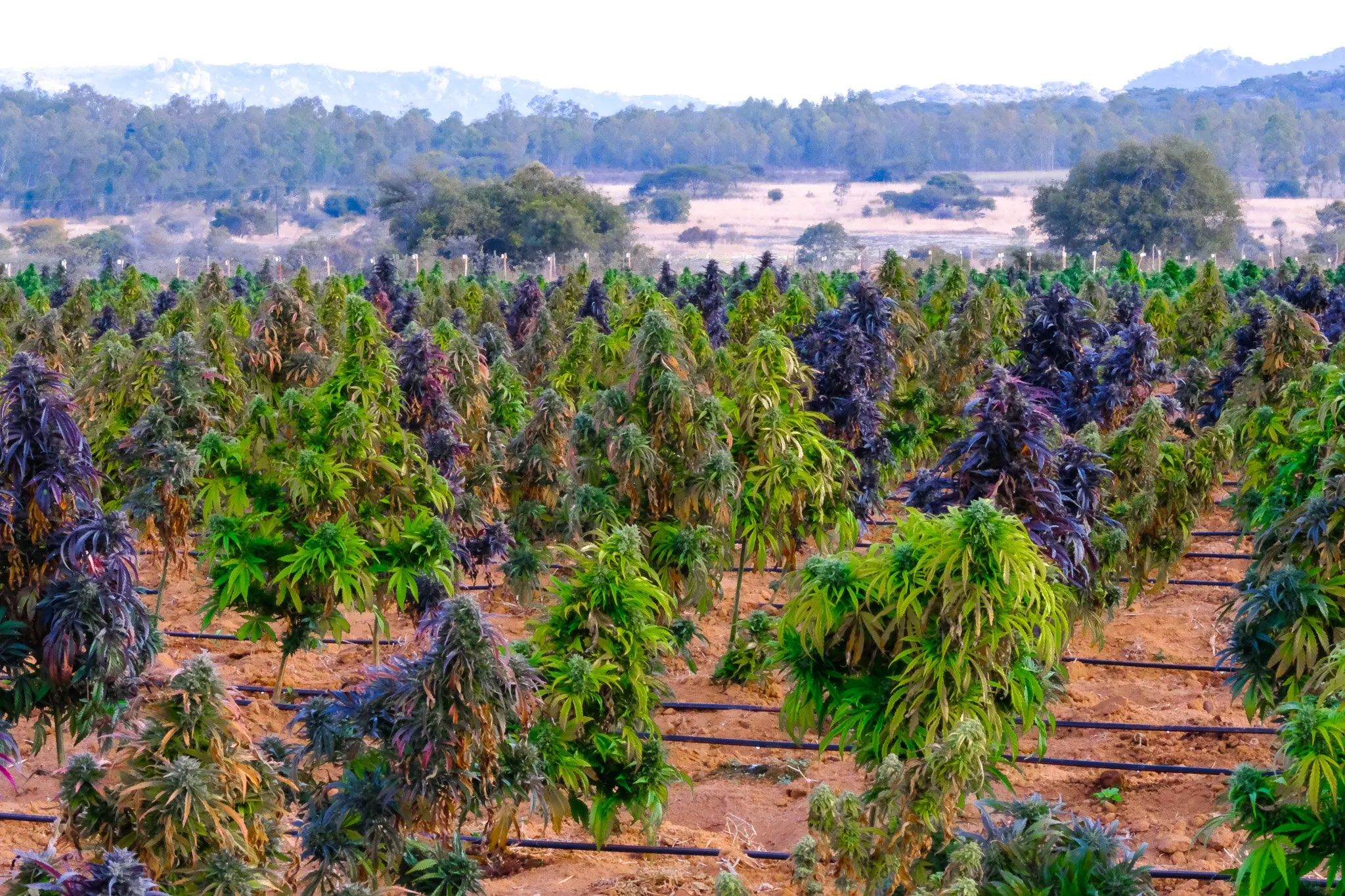
-
Red-flag report
Compact: what is critical for your decision comes first.
-
Prioritised findings
Each finding with evidence, assessment and priority — clarify before signing, address as a condition, or fix after closing.
-
Plan & liquidity review
Commented assumptions, adjusted scenarios and the resulting capital requirement.
-
Valuation view (operator's perspective)
A DCF-based value range across scenarios, the IRR of your position and the assumptions behind it.
-
Evidence from the site visit
Notes and — where permitted — photos of infrastructure, processes and findings.
-
Debrief
Discussion of the results with you — on request with your investment committee, bank or advisers.
Track record
Four perspectives in one review
Due-diligence mandates are confidential, so this page shows no client cases. What the review builds on is documented — work on the operator's side, in audits and quality systems, in planning and finance, and in oversight.
-
01 Operator
Knows a facility from the inside
-
2020 – 2021
Head of Cultivation indoor & outdoor at Vapes'n'Dabs (CH): built and ran a 1-hectare outdoor CBD cultivation and indoor production, including business planning.
-
since 2023
Facility design and quality-system development for a planned medical-cannabis facility in Germany (380 nanometer).
-
2021 – 2024
Planning of a GMP-compatible facility and a plant-tissue-culture lab (AvaGro / Avacare, Namibia & Zimbabwe).
-
-
02 Audit & quality
Assesses third parties in a structured way
-
2016 – 2018
IT internal audit at Schwarz Dienstleistungen (Lidl/Kaufland): controls, structured assessment, documentation.
-
2023
For STADA (via Corellia): ~40 producers pre-qualified worldwide and 10 on-site GACP/GMP audits in Portugal, Germany and Canada — documented to support supplier selection.
-
2021 – 2023
GACP quality systems for Speropharm (CH) and Luxacan (ZW) at Cannavigia; reviewed with Luis Meirinhos-Soares, former Head Inspector GACP at Infarmed.
-
-
03 Planning & finance
Rebuilds plans and figures
-
since 2021
45+ companies advised — among other things on business plans, operating models and liquidity planning; company valuations and due diligence for acquisitions from an SME perspective.
-
own tool
Planning software with DCF valuation, IRR, capital requirement and scenario comparison.
-
since 2023
Investor relations for a planned medical-cannabis facility in Germany (380 nanometer).
-
-
04 Oversight & market
Knows a supervisory board's questions
-
2025 – 2026
Supervisory board of CBG Hannover, a cooperative combining a cannabis social club and a cultivation association: oversight of fund use, facility planning and strategic decisions.
-
current
Board member of the BVCW; coordinator of the BCAv and lead of its working group on risk minimisation & product safety — a broad view of the German market.
-

Who reviews
Lorenz Minks
Research Gardens is a consultancy with a partner network, based in Küsnacht (Zurich). You work directly with me — from the first call to the debrief.
I studied business informatics and horticultural sciences, started out in internal audit and have since worked on cannabis projects from the operator's, the planner's and the supervisory side. A due diligence brings these perspectives together — and where a question goes beyond them, I say so and involve the right partners.
FAQ
Frequently asked questions
How is confidentiality ensured?
An NDA is signed before any documents are exchanged. Documents and results are used solely for the mandate, and the report is addressed to you as the client. Whether and in what form findings are shared with others — the other side of the transaction, for example — is your decision.
How independent is the review?
Research Gardens works for you as the client, not for the other side of the transaction, and the fee does not depend on whether the transaction goes ahead. Potential conflicts of interest — for example if a party to the transaction is or was a client or partner of Research Gardens — are disclosed before the mandate starts. If independence cannot be ensured, we decline the mandate.
Does it replace legal, tax or financial due diligence?
No. The review covers technical, operational and economic plausibility from an operator's perspective. Legal and tax due diligence, the audit of financial statements and formal valuation reports remain with lawyers, tax advisers and auditors. Where needed, we work alongside your advisers or involve law firms from our partner network.
How long does a review take?
That depends on the occasion, the size of the operation and how quickly documents are available. After the first call and an initial look at the documents, you receive a proposal for scope, timeline and fee. If a signing date is set, we plan backwards from it — red flags first.
Can the review be done remotely?
Document review, model rebuild and management interviews work remotely and are suitable as a first red-flag screening. The condition of the facility, the processes as they are actually run and product quality can only be judged reliably on site — for an acquisition or a larger investment we recommend a site visit.
In which countries do you work?
Research Gardens is based in Switzerland and works mainly in Germany and Switzerland. Previous audit and advisory projects also took place in Portugal, Canada, Namibia and Zimbabwe. Reviews are conducted in German or English.
Next step
Is an acquisition, investment or financing coming up?
Tell us about the occasion and your timeline. In a confidential first call we clarify scope, procedure and next steps — free of charge. You don't need to name the target at this stage.
Helpful for the first call
- Occasion and timeline — e.g. signing or financing date
- Type, country and stage of the target
- Documents already available
- Questions from your investment committee or bank
An NDA is signed before any document is exchanged.