Cannabis Economy / / 15 min read
Sun-Grown Cannabis Terroir: The Mendocino Evidence
Why does sun-grown cannabis from Mendocino taste different? The answer lies in living soil, microclimate and genetics.
by Simon Seidler · Regenerative Cultivation
By Simon Seidler
A Mendocino Harvest, Up Close
The fog in Mendocino County doesn’t burn off quickly. It sits in the river valleys until mid-morning, sometimes longer, and the hills above hold onto the cool and damp well past sunrise. By the time the light reaches the beds at Sunrise Gardens, the cover crop is already steaming slightly: clover, straw, something faintly fermented where the mulch layer is breaking down into the soil beneath it.
This is where harvest starts. Not with a timer or a harvest window on a spreadsheet, but with a walk through the rows. Frank Wilker of Sunrise Gardens, who runs the farm and took home the Emerald Cup in 2023, reads the plants the way you read weather: resin development, the way a branch holds the weight of its flower, the color shift in the trichomes under a loupe. The calendar is a rough guide. The plant tells you when.
I spent two seasons at Sunrise Gardens. The first in fall 2025, working through bloom, harvest and post-harvest processing. The second starting in spring 2026, from bed preparation and soil amendments through transplant and irrigation setup. Over those months I noticed something that was hard to articulate at first but became harder to ignore: the cannabis coming off those hillsides had a character that felt specific to the place. Not just “good outdoor” in the generic sense. Something tied to that particular combination of red clay loam, coastal fog, diurnal temperature swings and five months of unfiltered Mendocino sun.
That specificity has a name. In viticulture, they call it terroir. The question worth asking is whether it means anything in cannabis, and what the biology behind it actually looks like.
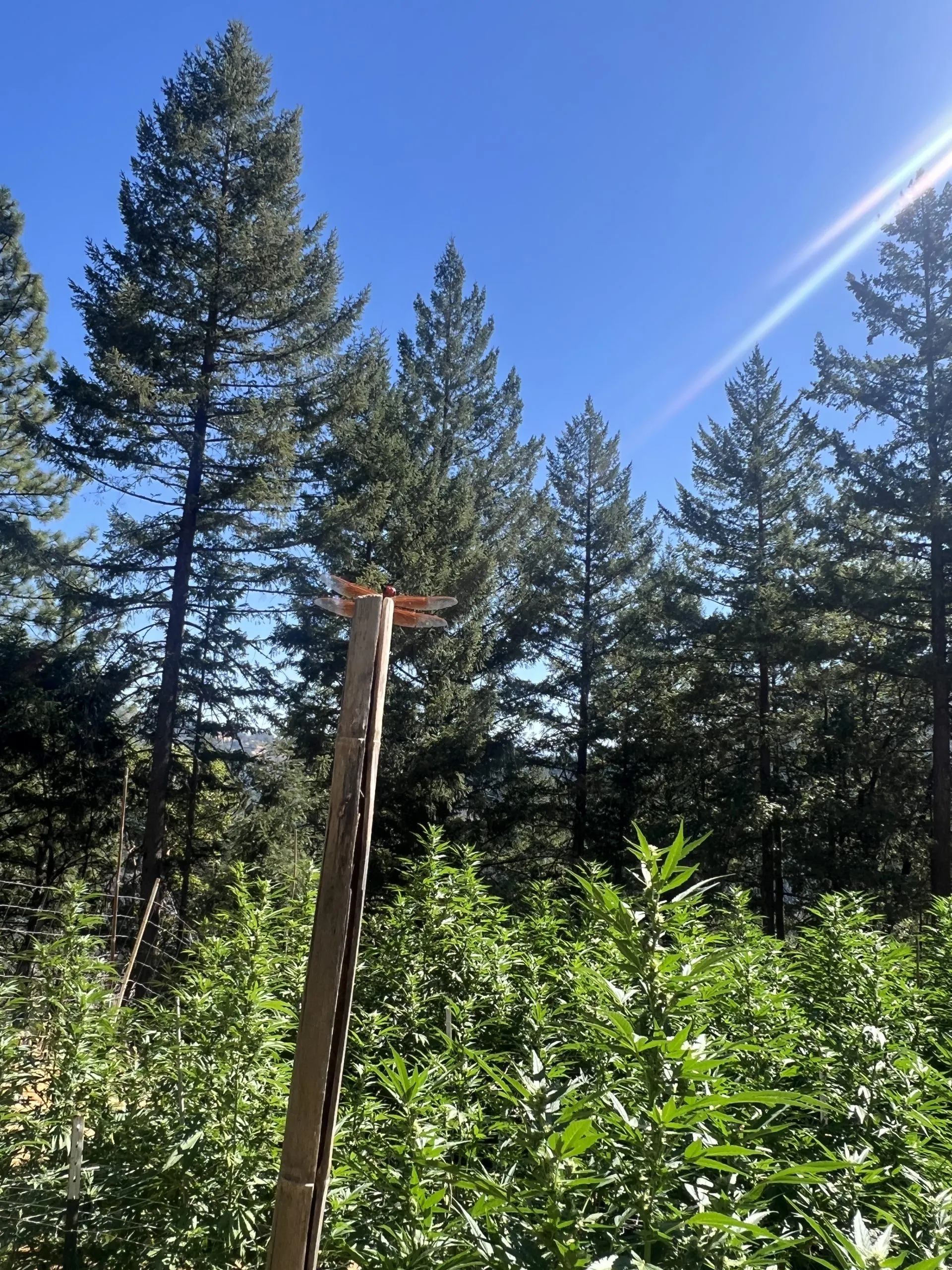
Sunrise Gardens, Mendocino County. A dragonfly on a trellis stake — the kind of biodiversity marker that tells you the IPM is working.
Terroir: Borrowed Concept, Real Phenomenon
The term comes from French viticulture. Wine people use it to describe the complete natural environment in which a grape is grown: soil composition, topography, climate and the microbial communities that connect them. A Burgundy Pinot Noir doesn’t taste like a Willamette Valley Pinot Noir even when grown from the same clone. The place does something to the plant.
Cannabis growers and researchers have been borrowing the concept cautiously for the last decade. Cautiously, because the scientific literature is still thin, the legal history of the crop suppressed systematic study for decades and the word gets picked up by marketing departments faster than it gets studied in labs. But the underlying biology is real. It’s worth taking seriously on its own terms, not as a branding exercise.
For cannabis, terroir operates through three interacting pillars: soil chemistry and microbiology, microclimate and the interaction between genetics and environment. None of these works alone. Together, they shape what ends up in the trichome and eventually on the palate.
For a broader introduction to cannabis as a botanical and cultural plant, see: Cannabis — Introduction of a Long Forgotten Plant
The Soil as Flavor Engine
Terpenes don’t come from nowhere. They’re synthesized from precursors the plant acquires, transforms and allocates through a series of enzymatic steps, and the soil is where a significant part of that process begins.
The dominant terpenes in cannabis, myrcene, limonene, beta-caryophyllene, linalool, terpinolene, pinene and others, are isoprenoid compounds. Their biosynthesis runs through two pathways: the cytosolic mevalonate (MVA) pathway, primarily responsible for sesquiterpenes, and the plastidic methylerythritol phosphate (MEP) pathway, which handles monoterpenes. Both draw on carbon skeletons from photosynthesis. But the availability of mineral cofactors and microbial intermediates in the rhizosphere shapes how efficiently and in what proportions those pathways run. Change the soil, and you change the inputs to those pathways.
This is where living soil earns its name.
For a deep dive into living soil composition and soil tests, see: Indoor Living Soil — The Knowledge Base
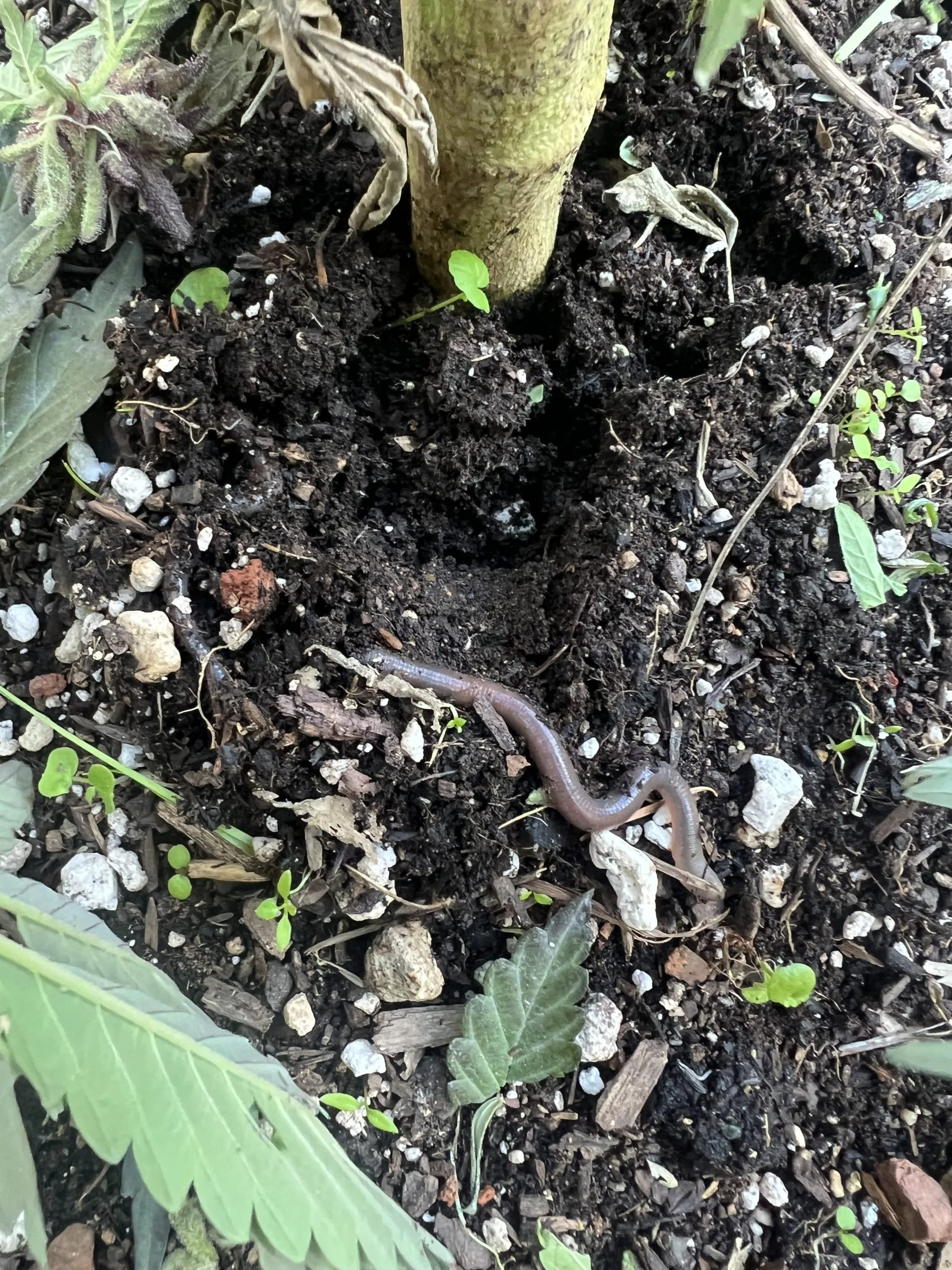
Living soil at Sunrise Gardens with earthworms.
A biologically active soil doesn’t feed the plant directly. It feeds the system around the plant. Diverse bacterial communities, functioning mycorrhizal networks and an intact predator-prey dynamic among micro and meso fauna mineralize organic matter on a continuous, demand-driven basis, not on a grower’s feeding schedule. Phosphorus solubilized by Bacillus species becomes available when root exudates signal demand. Sulfur cycled through fungal hyphae moves through the profile at a pace the plant can actually use. Zinc released by organic acid exudates reaches the root zone in chelated form rather than as a salt competing for uptake sites. The timing and bioavailability of these flows is something you manage by maintaining the biology, not by dialing an EC target. That’s a fundamentally different relationship between grower, soil and plant.
At Sunrise Gardens, the soil inputs reflect this understanding. Korean Natural Farming (KNF) applications, fermented plant juice (FPJ) prepared from apple shoots or local plants like Miner’s lettuce and Coyote brush, water-soluble calcium from eggshell and vinegar, lactic acid bacteria serum, are applied on a cycle tied to growth stage, not to a fixed schedule. The logic is biological: you’re feeding the microbial community as much as the plant and trusting that community to mediate what the plant actually receives.
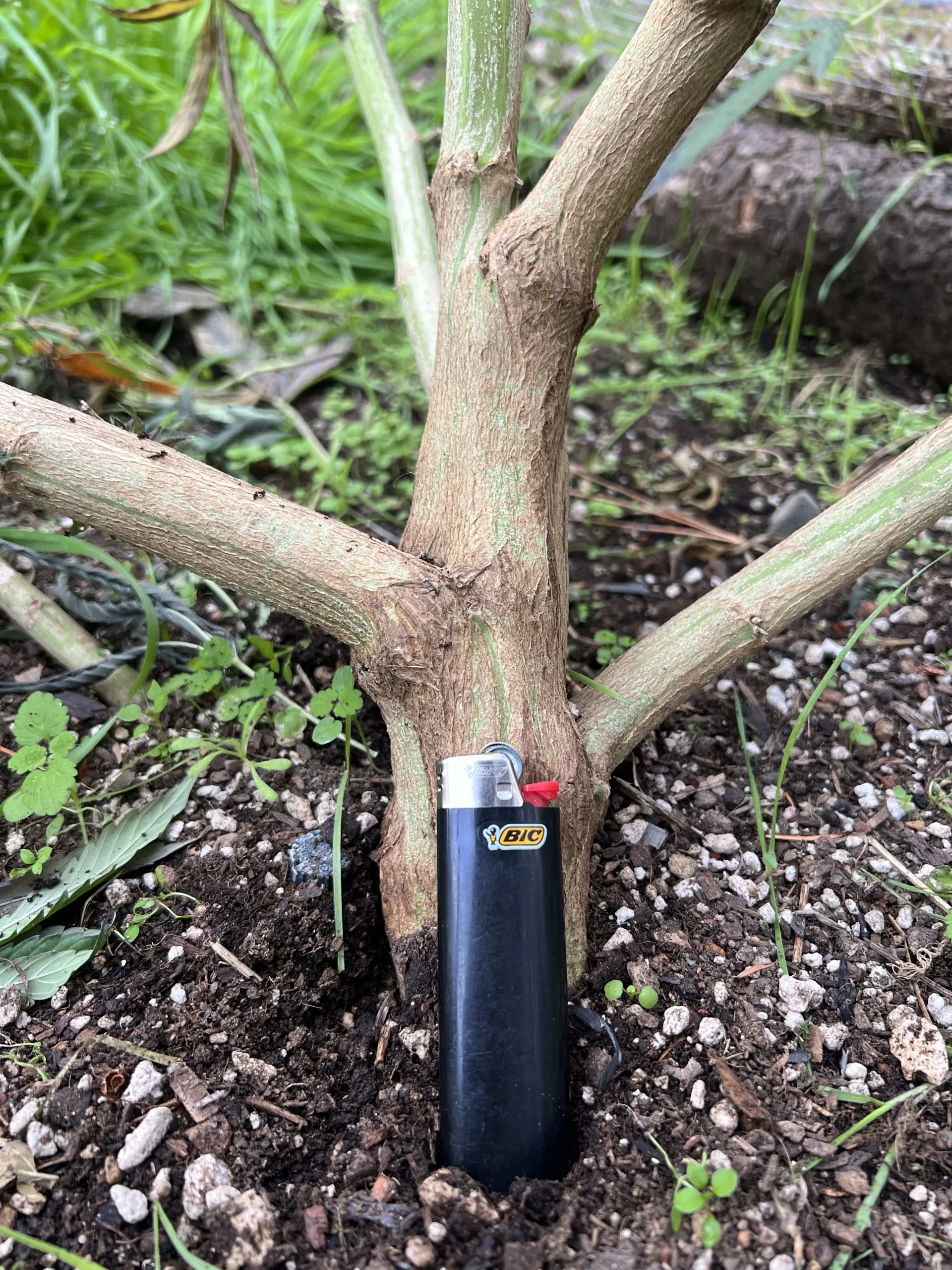
Stem diameter at Sunrise Gardens, late season. The Bic lighter gives scale. This is what five months of full sun, living soil and no-till do to a plant’s vascular structure.
The cannabis-specific research on soil-to-terpene pathways is still catching up, but parallel work in other aromatic crops is instructive. Studies on Ocimum basilicum (basil) and Lavandula angustifolia (lavender) have shown that mycorrhizal inoculation alters volatile compound profiles in ways that go well beyond simple nutrient effects. The fungal symbiosis appears to directly influence secondary metabolite partitioning. Given that cannabis is a strong mycorrhizal host under natural conditions, similar dynamics are biologically plausible and badly need systematic study.
What the soil can’t do is fully separate from what happens above ground. The two are in constant dialogue.
Microclimate: Mendocino as a Case Study
Mendocino County sits where marine influence and inland heat meet head-on. The Pacific pushes fog through river valleys most mornings. By afternoon, those same valleys can push past 35°C. The diurnal temperature swing, sometimes 20°C or more between night and day, creates a specific physiological stress pattern that the plant responds to in ways that matter for flavor.
Cold nights slow vegetative processes and appear to concentrate secondary metabolite production, particularly late in flower when the plant is shifting resources toward reproduction. This isn’t unique to cannabis. Essential oil content in many aromatic plants increases under mild temperature stress, a well-documented response involving upregulation of terpene synthase genes. Part of the mechanism is UV exposure, part of it is a carbon allocation shift when growth slows and the plant has more to spend on chemistry.
At Sunrise Gardens, elevation adds another layer. The farm sits in the hills above the valley floor, which means more direct UV radiation, better airflow and a season that ends slightly earlier than coastal lowlands but with more intense light in late summer. The combination of clay-heavy native soil amended but not replaced, long days at latitude 39°N and the thermal cycling of a coastal mountain environment produces growing conditions that can’t be replicated by dialing in a climate control system. You can approximate individual variables. You can’t replicate the whole.
Plant physiologists call this environmental heterogeneity: variation in growing conditions that forces adaptive responses in the plant. Homogeneous indoor environments, however precisely controlled, eliminate this variation by design. The question is whether that variation generates compounds or compound ratios that a controlled environment can’t match. The honest answer is: often yes, sometimes no and we don’t yet have the tools to predict which.
Light: What the Sun Does That LEDs Don’t (Yet)
Full-spectrum sunlight includes wavelengths that most grow lights either skip entirely or deliver at a fraction of outdoor intensity. The most-discussed for cannabis secondary metabolism is UV-B radiation, in the range of 280–315 nm. The reality here is more complicated than the discourse suggests, and worth getting right.
An older study by Lydon et al. (1987) found a positive correlation between UV-B exposure and cannabinoid content in two Cannabis sativa chemotypes, and this result traveled far in grower communities. More recent and better-controlled work has complicated the picture. Rodriguez-Morrison et al. (2021) found that increasing UV-B actually reduced total terpene content in both cultivars tested and decreased THCA in one of them. Llewellyn et al. (2022) reached similar conclusions under controlled indoor conditions: UV supplementation offered no commercially meaningful improvement in cannabinoid or terpene yield.
That doesn’t kill the terroir argument. It sharpens it. Those indoor UV studies are testing a single variable in an otherwise stable environment. A plant growing under full California sun for five months is experiencing something categorically different: UV as one component of a continuously varying, full-spectrum light environment, layered on top of temperature cycling, diurnal CO2 variation and a biologically active rhizosphere. The 2023 Columbia University study by Zandkarimi et al. compared genetically identical cultivars grown indoors versus outdoors in living soil and found significantly different metabolomic profiles: more sesquiterpenes, more rare cannabinoid variants and a noticeably more pungent and resinous outdoor product. That’s the controlled comparison the field needed.
Beyond UV, sunlight includes far-red wavelengths that influence the phytochrome system, affecting canopy architecture, flowering transition and carbon assimilation efficiency. The Emerson enhancement effect, where simultaneous red and far-red light produces more photosynthesis than either wavelength alone, is well documented and increasingly addressed in LED design. But the full complexity of sunlight as both a photosynthetic input and a developmental signal across an entire growing season isn’t replicated by any fixture yet.
A plant finishing in Mendocino sun from June through October isn’t just getting more light. It’s getting a different kind of light: dynamic, spectrally complete, varying with weather, angle and season in ways no lamp can follow.
Genetics x Environment: The Same Plant, a Different Expression
Terroir isn’t just about place. It’s about the interaction between place and genetics. The same cultivar, same genotype, grown in two different environments will express a different phenotype. That’s not a flaw in the genetics. It’s phenotypic plasticity and it’s the whole point.
Which genes are expressed, and at what levels, depends on environmental signals: light quality and intensity, temperature, water availability, soil chemistry and the microbial community around the roots. A cultivar that leads with linalool indoors might shift toward myrcene or caryophyllene outdoors because the regulatory signals controlling terpene synthase gene expression have changed. The COA you have from one environment doesn’t tell you what the same plant does somewhere else.
The Zandkarimi et al. (2023) study made this concrete: identical genetics, different growing environments, meaningfully different compound profiles. Outdoor living soil produced more sesquiterpenes and rare cannabinoids. Same genes, different place, different plant.
I had a conversation about this with Nate Heights of Higher Heights, a Mendocino County farm with decades of experience growing and selecting genetics in the Emerald Triangle. His observation was direct: take a cultivar out of its origin environment, move it from Hawaii to California for example, and you lose something. Not just a little. Significantly. The flavor profile shifts, the aromatic intensity drops and what made that plant special in its original context doesn’t fully survive the transplant. His argument is that genetics carry a kind of environmental memory, an adaptation to the specific combination of soil, light, humidity and seasonal rhythm where they were selected. Put them somewhere else and the expression drifts. The plant grows, it flowers, it produces cannabinoids. But it’s not quite the same plant anymore.
This isn’t a fringe position. It aligns with what plant biologists know about phenotypic plasticity and local adaptation in perennial crops. It also has a practical implication the industry mostly ignores: if you select phenotypes exclusively in one environment, you’re optimizing for that environment. Genetics developed and stabilized under Mendocino sun, in Mendocino soil, carry that context. Running them under LEDs in a climate-controlled room will produce a result, but probably not the full one.
At Sunrise Gardens in the 2025 season, three cultivars made this visible. Tropicana Cherry (Relentless Genetics, Tropicana Cookies x Cherry Cookies F3) is citrus-forward on paper and leads with limonene in most indoor COAs. The 2025 Sunrise harvest COA told a different story: beta-caryophyllene first at 3.749 mg/g, limonene second at 2.944 mg/g, linalool third at 1.460 mg/g. Total terpenoids at 1.1847%, total THC at 26.95%. Beta-caryophyllene synthesis is temperature-sensitive. The Mendocino diurnal swings shifted the terpene hierarchy in a direction an indoor environment wouldn’t have produced from the same cut.
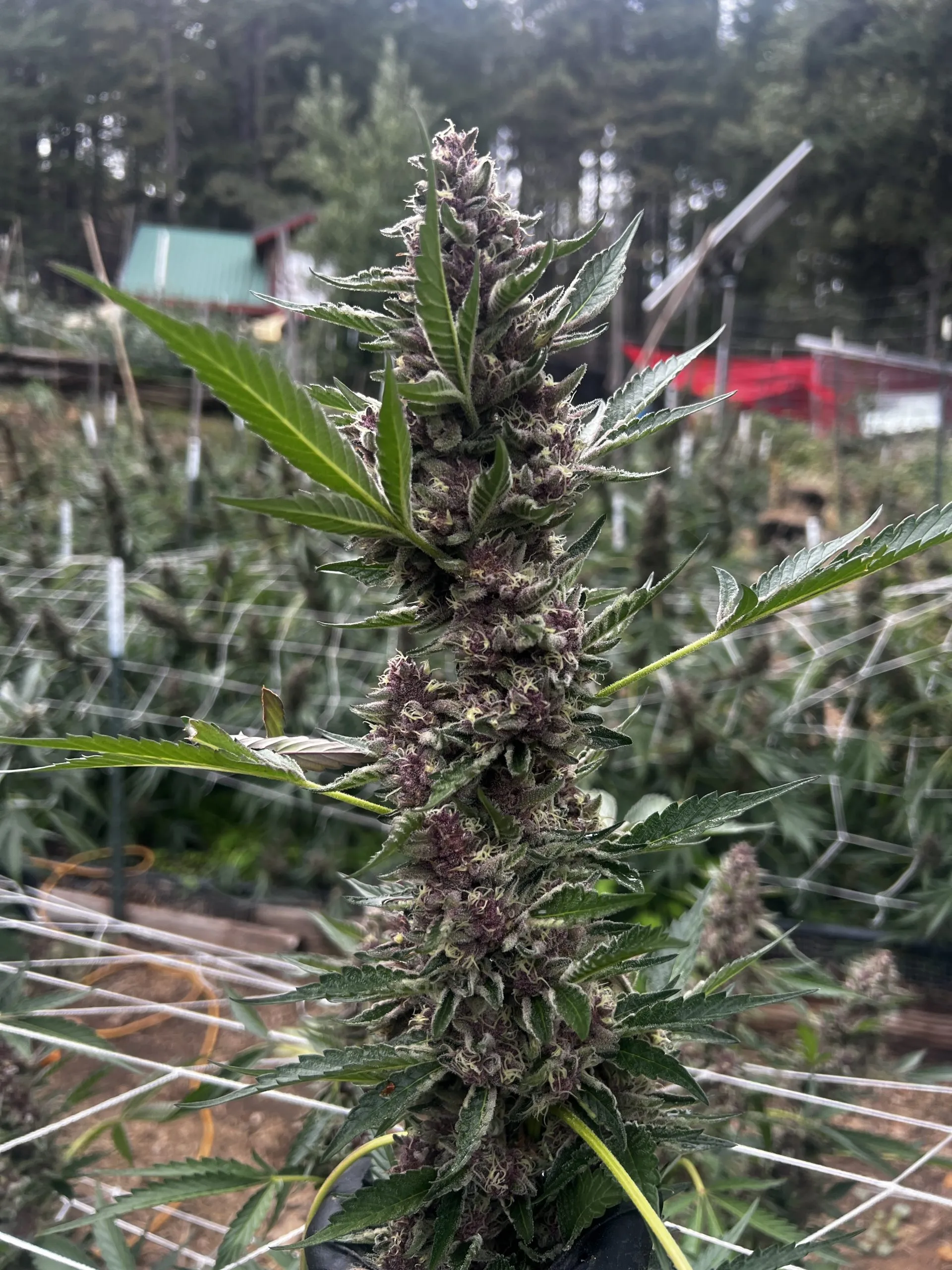
Tropicana Cherry (Relentless Genetics), Sunrise Gardens 2025. Beta-caryophyllene led the COA at 3.749 mg/g — ahead of limonene, contrary to most indoor expressions of the same genetics.
In the jar, it didn’t smell like the breeder description. It was darker. Black Forest cake without the chocolate, low sugar, something almost savory underneath the fruit. The smoke was heavy, resinous, oily in a way that sits in the chest. Not a quick citrus hit. A slow, layered expression that takes a moment to open. That didn’t come from a bottle. It came from the hillside.
Pinnacle (Purple City Genetics, Slurty 3 x Gush Mints) went purple in October not because anyone manipulated temperatures but because October happened. The anthocyanin expression was a direct environmental response: the same diurnal swings that shifted Trop Cherry’s terpene hierarchy also triggered the pigmentation. Indoors, purple gets induced by briefly dropping night temps. Outdoors in Mendocino, it’s just the season doing what the season does. Forbidden Blueprint (Purple City Genetics, Forbidden Fruit x Watermelon Zkittlez x Blueprint) carried a heavy exotic-fruit and candy profile that deepened through the long Mendocino finish. Genetics with that kind of fruit-forward potential tend to express more fully under a slow, naturally-lit outdoor season than under a fixed 12/12 indoor cycle. The extended ripening window lets secondary metabolite accumulation run its course. Indoor harvest schedules typically cut that short.
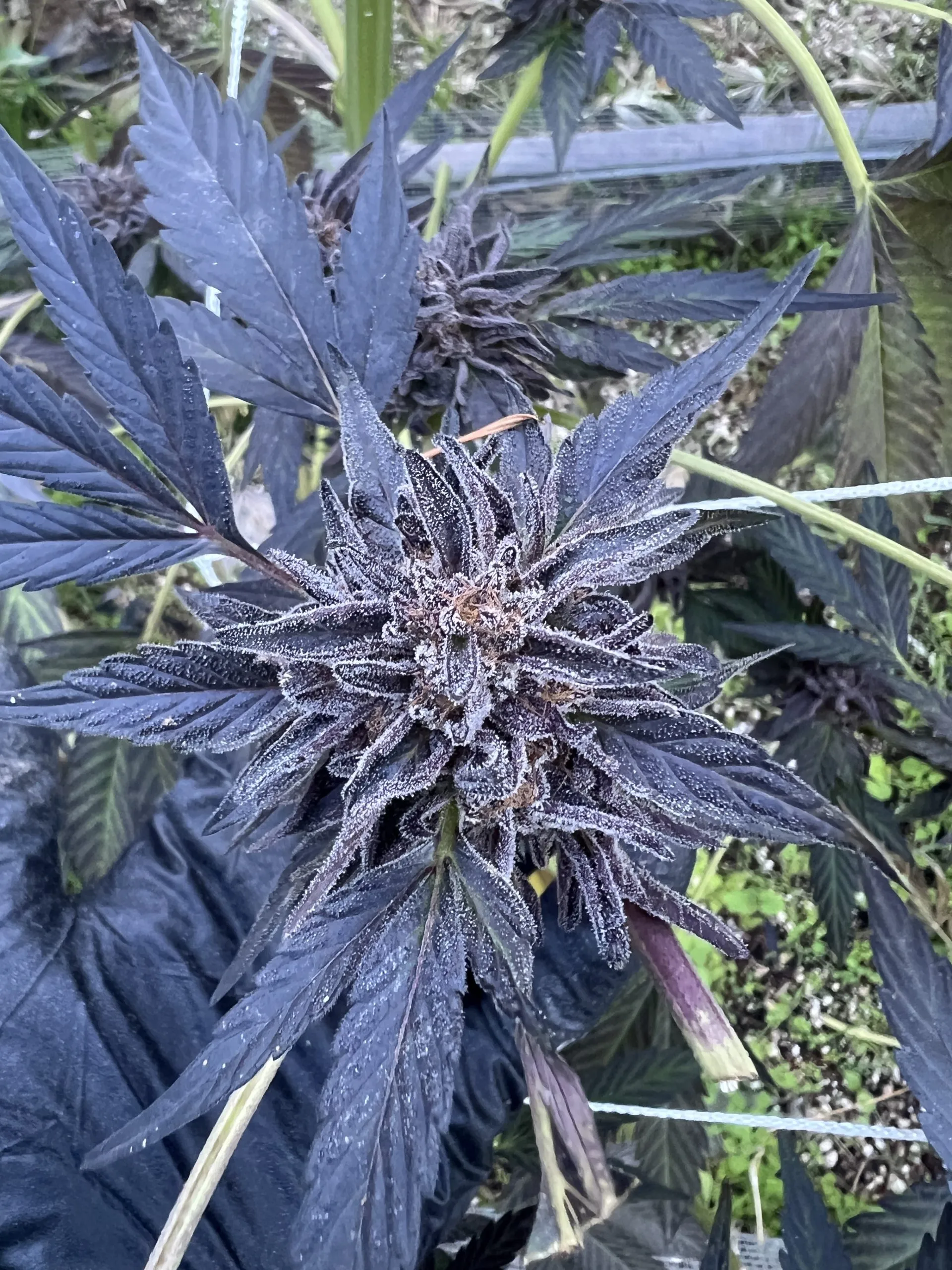
Pinnacle (Purple City Genetics, Slurty 3 x Gush Mints), Sunrise Gardens 2025. The anthocyanin expression is not induced — it’s October doing what October does on a Mendocino hillside.
The Measurement Problem
This is where the honest version of the terroir argument has to slow down.
The biology is coherent. The mechanisms are real. But the evidence base in cannabis is weaker than the enthusiasm around the concept suggests, and it’s worth saying so clearly.
Cannabis research has been underfunded and legally constrained for decades. The peer-reviewed literature on terpene-environment interactions in cannabis is thin compared to closely related crops. Hops (Humulus lupulus) for example has received substantial research funding from the brewing industry and the literature on hop terroir is considerably more developed. Cannabis is getting there, but slowly.
Standard COA data has a structural problem: terpenes are volatile and COAs capture a single time point after harvest. Post-harvest handling, drying speed, temperature, humidity, curing method and packaging all have significant effects on the terpene profile by the time it reaches a lab. Two identical plants harvested the same day and cured differently will show different COA results. Comparing “outdoor terroir” to “indoor cultivation” across different operations using COA data alone is almost meaningless without controlled study design.
There’s also no standardized sensory evaluation framework for cannabis. Wine has the WSET. Coffee has Q grading. Cannabis has enthusiasts with different palates and inconsistent vocabulary. The sensory dimension of terroir, which may be the most important one from a consumer perspective, currently can’t be documented in a reproducible way.
None of that disproves the terroir hypothesis. It means the hypothesis rests on strong mechanistic plausibility and consistent observation from skilled growers, but not yet on the kind of replicated, peer-reviewed field studies that would satisfy a skeptic. The Zandkarimi study is a meaningful step. It’s not the end of the conversation. That gap is a research opportunity, not a reason to walk away from the concept.
Why This Matters
If terroir is real in cannabis, and the biological evidence suggests it is even where measurement lags behind, then it has direct consequences for how the industry is structured, how products get valued and whether small farms can survive.
Sun-grown cannabis from specific regions with documented soil biology and growing practices represents something that can’t be infinitely scaled or relocated. A Mendocino farm working in amended native soil, applying on-farm KNF inputs, managing a living cover crop through the season and harvesting by hand in October is producing something place-specific. The economics are different from a warehouse grow. The product should reflect that.
The same logic applies in Europe, though the regulatory context looks different. German Cannabis Social Clubs operating under the 2024 CanG framework are legally required to grow non-commercially, for their members, within defined quantities. That constraint, often read as a limitation, is structurally similar to what defines small-farm terroir production in California: bounded scale, known provenance, a direct relationship between grower and consumer. A CSC growing in living soil with documented inputs and member-facing transparency already has the infrastructure for terroir-style differentiation built into its legal model. What’s missing is the vocabulary and measurement tools to communicate it. The Mendocino model offers a concrete reference point.
In the US, certifications like Sun+Earth and Clean Green Certified are building infrastructure for provenance-based differentiation, verifying not just inputs but growing practices and farmer livelihoods. Europe hasn’t developed equivalent frameworks for the CSC context yet, but the regulatory foundation exists. Member transparency requirements, input documentation and the non-commercial mandate are a starting point. What remains is the will to treat them as quality arguments rather than compliance paperwork.
For consumers it means learning to ask different questions. Not just “what’s the THC?” but where was this grown, in what kind of soil and by whom. Cannabis is moving toward the same provenance literacy that already exists in specialty coffee and natural wine. That shift doesn’t happen automatically. It requires growers who can tell the story and consumers willing to listen.
For growers, whether on a Mendocino hillside or in a Berlin grow room, the investment in living soil, in understanding your inputs, in letting the plant respond to its environment rather than suppressing that response, is not just an ecological choice. It’s a quality argument. It’s what separates a product with a story from a commodity with a number.
The ground beneath the plant is not a passive substrate. It’s an active participant in what the plant becomes. That’s not a metaphor. It’s biology.
Simon Seidler worked two seasons at Sunrise Gardens in Mendocino County, California (2025 and 2026), under Frank Wilker, Emerald Cup 2023 winner. He is also Senior Grower and Head of Harvest at Cannabis Social Club Hannover and writes about regenerative cultivation for cannabisblog.eu and research-gardens.com. He documents farms and cultivation systems at regenerative-cultivation.com.
Follow the author:
Instagram: @simonrootss LinkedIn: Simon Seidler
Key References and Further Reading
- Booth, J.K., Page, J.E., Bohlmann, J. (2017). Terpene synthases from Cannabis sativa. PLOS ONE, 12(3).
- Deng, C., et al. (2012). Effect of arbuscular mycorrhizal fungi inoculation on volatile compounds in basil. Food Chemistry, 132(4).
- Llewellyn, D., et al. (2022). Indoor grown cannabis yield increased proportionally with light intensity, but UV radiation did not affect yield or cannabinoid content. Frontiers in Plant Science, 13.
- Lydon, J., Teramura, A.H., Coffman, C.B. (1987). UV-B radiation effects on photosynthesis, growth and cannabinoid production of two Cannabis sativa chemotypes. Photochemistry and Photobiology, 46(2).
- Rodriguez-Morrison, V., Llewellyn, D., Zheng, Y. (2021). Cannabis inflorescence yield and cannabinoid concentration are not increased with exposure to short-wavelength UV-B radiation. Frontiers in Plant Science, 12.
- Zandkarimi, F., et al. (2023). Comparison of the cannabinoid and terpene profiles in commercial cannabis from natural and artificial cultivation. Molecules, 28(2), 833.
- Emerson, R., et al. (1957). Enhancement by light of longer wavelength upon quantum yield of photosynthesis. PNAS, 43(1).
- KNF Network / Youngsang Cho. JADAM Organic Farming (2016).
- Sun+Earth Certification Standards: sunandearth.org
- Clean Green Certified: cleangreencert.com